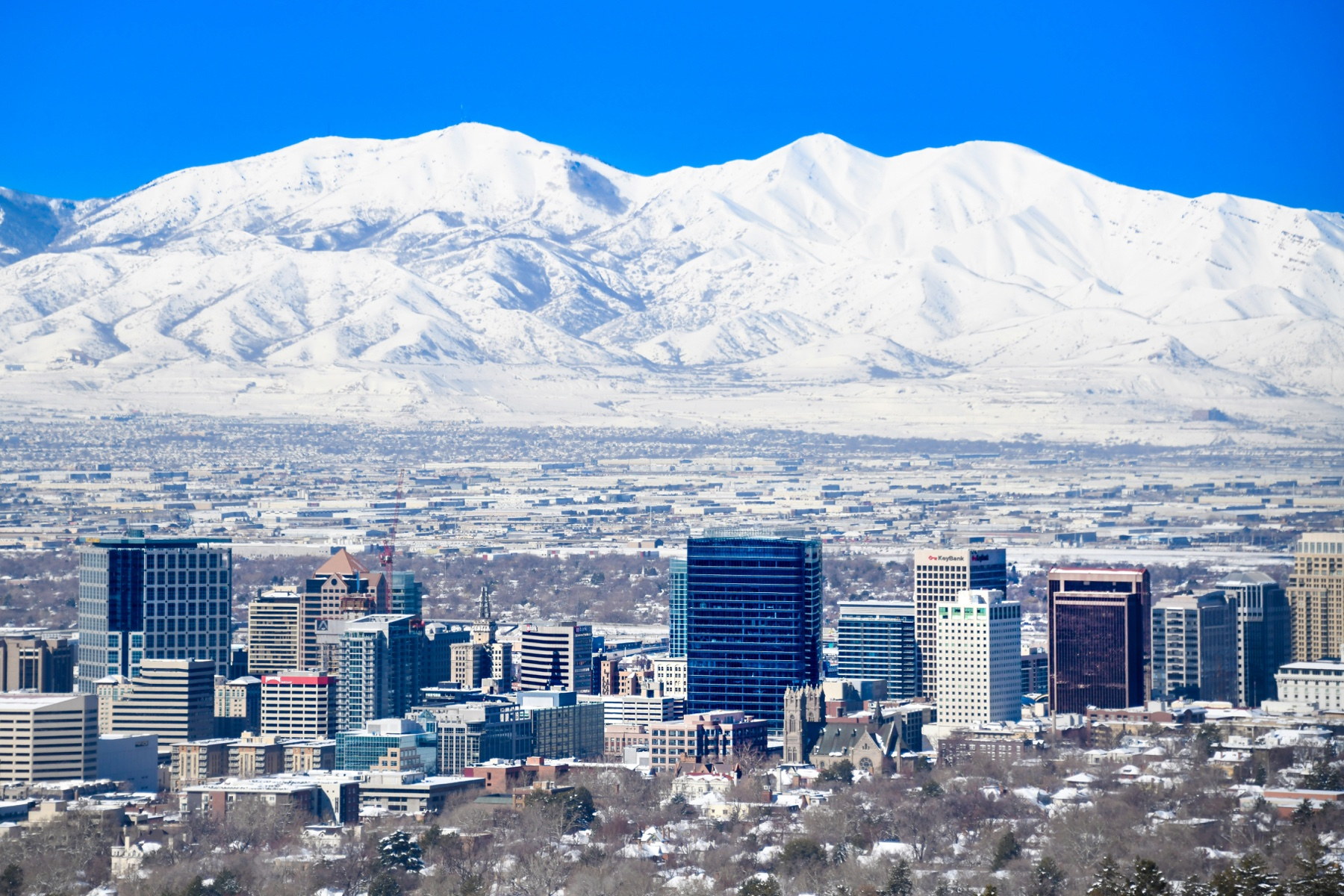
Snow-covered Salt Lake City skyline with the Wasatch mountains rising behind it

Gateway field guide · Utah

Salt Lake City and the Wasatch ski trip planning guide

Few ski cities let you land at a major international airport, reach world-class skiing the same day, and come back to a real city for dinner. Salt Lake does.

Photo: Brent Pace / Unsplash

Salt Lake City's geography almost feels like cheating. Walk out of an airport serving nearly 100 nonstop destinations and the Wasatch is already sitting on the horizon. Alta, Snowbird, Brighton and Solitude are roughly 32 to 35 miles from the terminal; in normal conditions, you can plausibly land in the morning and ski that afternoon.

But proximity creates its own bad assumption: that everything called “Wasatch skiing” belongs to one convenient ski trip. It doesn't. The Cottonwoods, Park City, Snowbasin and Powder Mountain are different transportation problems. A pass may put them beside each other on a screen; winter roads do not.

Salt Lake is a gateway, not a magic center point.

The decision at a glance

Short answer

Build around the Cottonwoods

Best for the classic Salt Lake city-and-ski trip.

Stay in Salt Lake City, enjoy an actual city after skiing, and use a repeatable valley-to-transit strategy for Alta, Snowbird, Brighton and Solitude.

This is where Salt Lake's airport proximity becomes almost absurdly useful.

Treat Park City as its own trip

Best when Park City Mountain or Deer Valley gets most of the days.

One deliberate Park City day from Salt Lake works. Repeating the commute day after day is different.

If Park City owns the trip, stay there.

Make Snowbasin and Powder Mountain deliberate days

Best when the itinerary genuinely reaches north.

Snowbasin is more transit-accessible than many visitors realize. Powder Mountain sits farther into its own world. Both can be excellent, but neither belongs in a casual “we'll see how we feel tomorrow” loop with the Cottonwoods.

Don't collect Utah resort logos. Build a ski week that survives the roads between them.

The gateway advantage

SLC's airport-to-snow access really is that good

This is not tourism-board sleight of hand.

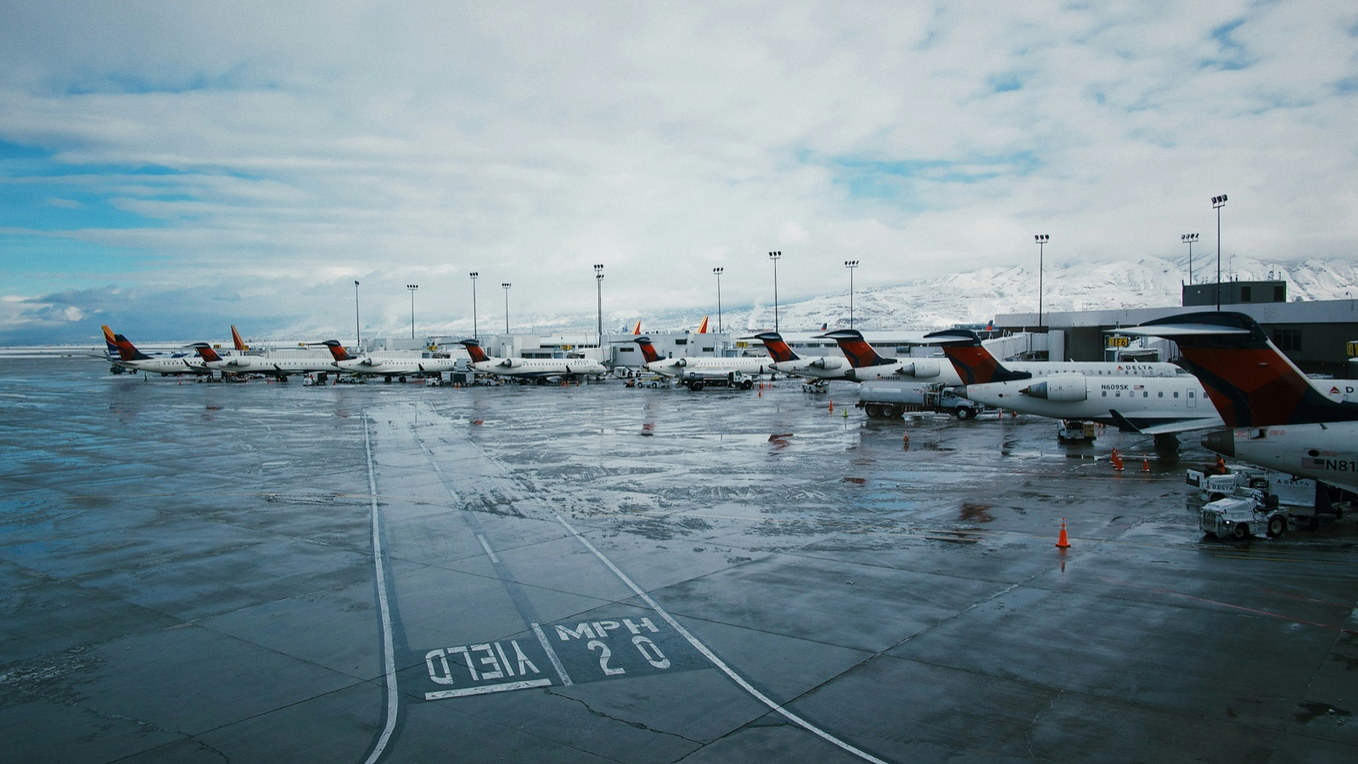
Salt Lake City International Airport sits about 10 to 15 minutes from downtown, while the four Cottonwoods resorts are roughly 40 to 50 minutes from the terminal in ordinary conditions. Ten Utah resorts sit within roughly an hour's drive.

That combination is exceptionally rare. You can take a morning flight, look out the terminal window at the Wasatch, and still have a realistic shot at afternoon skiing. More importantly, the city remains close enough that skiing does not require disappearing into a resort bubble for the week.

SLC is one of those airports where landing can feel less like the end of the travel day than the beginning of the ski day.

The catch is that “40 minutes away” describes geography, not a powder morning.

Aircraft at Salt Lake City International Airport with snowy Wasatch mountains visible beyond the terminal
Photo: Skyler Smith / Unsplash
~10–15 minAirport → downtown
~32–35 milesSLC → four Cottonwoods resorts
~40–50 minAirport → Cottonwoods in ordinary conditions
10 resortsWithin roughly an hour

The classic Salt Lake trip

The Cottonwoods are where Salt Lake earns its reputation

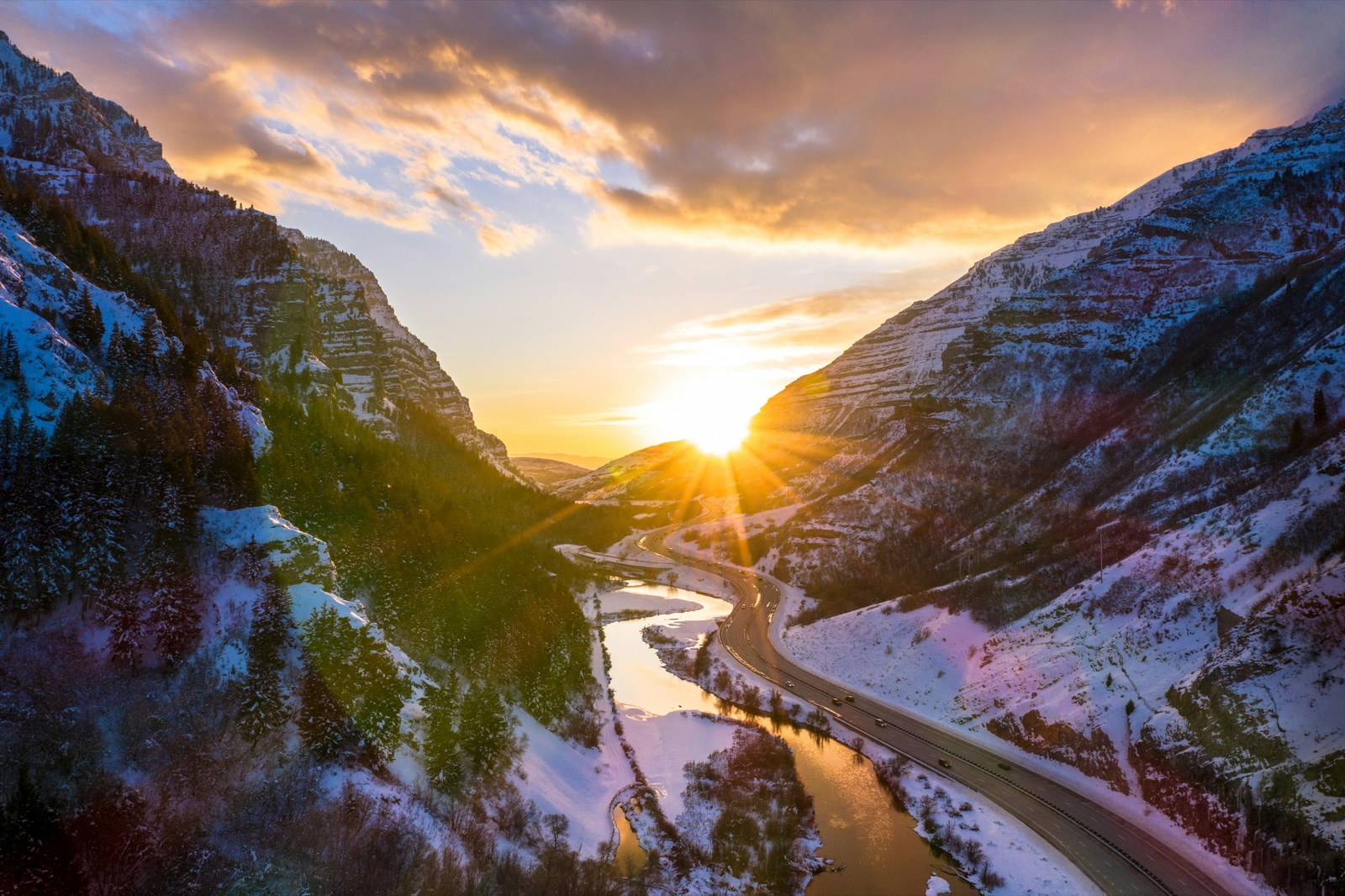
Winter road winding through a steep, snow-covered Wasatch canyon
Photo: T M / Unsplash

Alta and Snowbird in Little Cottonwood Canyon, plus Brighton and Solitude in Big Cottonwood, create the strongest case for keeping Salt Lake City as your base.

My preferred rhythm is simple: use the car for the valley and let transit handle the canyon. Drive from the hotel to an early, useful ski-bus boarding point, then let somebody else deal with the constrained canyon road, resort parking and active traction restrictions.

The key is where you board. Canyon-adjacent lots can fill early, and a downstream stop loses much of its value if the bus reaches you already packed.

For the Cottonwoods, don't stay closest to the canyon. Stay where you can reliably start the ski morning.

That distinction looks minor on a hotel map. At 7:40 a.m. after twelve inches of snow, it is the whole morning.

Parking changes the math

The ski bus is also a parking strategy now

Parking policy makes the transit calculation more interesting.

Alta, Brighton and Solitude all use systems that can add reservations or fees to the ski morning, while their rules become more forgiving later in the day. That makes afternoon skiing a legitimate strategy for arrival days, recovery mornings or anyone who does not consider first chair a religious obligation.

The ski bus is no longer just a traffic workaround. At some resorts, it is also a parking workaround.

Late-start skiing deserves more respect than it gets. Alta frees up after 1 p.m.; Brighton and Solitude also loosen parking restrictions earlier than the morning crush. On the right day, sleeping in is not surrender. It is strategy.

No rental required

Salt Lake can be car-light, or even car-free

The hybrid strategy is still my preference because a car is useful for restaurants, groceries, gear and getting to the right transit point quickly.

But a fully car-free trip is not fantasy.

TRAX runs directly from SLC airport into the valley for $2.50, and the rail network can connect into the Cottonwoods ski-bus system. With the right lodging and some willingness to transfer, the trip can be:

airport → TRAX → hotel → rail/bus → Cottonwoods

Cheap. Functional. Slightly more effort.

The tradeoff is flexibility. A car-free trip is less elegant when you want dinner across town, need groceries late, change ski plans at dawn or haul a week's worth of gear through multiple connections.

Car-free: possible.

Car-light: probably the sweet spot.

Driving the canyon every morning: not automatically the smart choice.

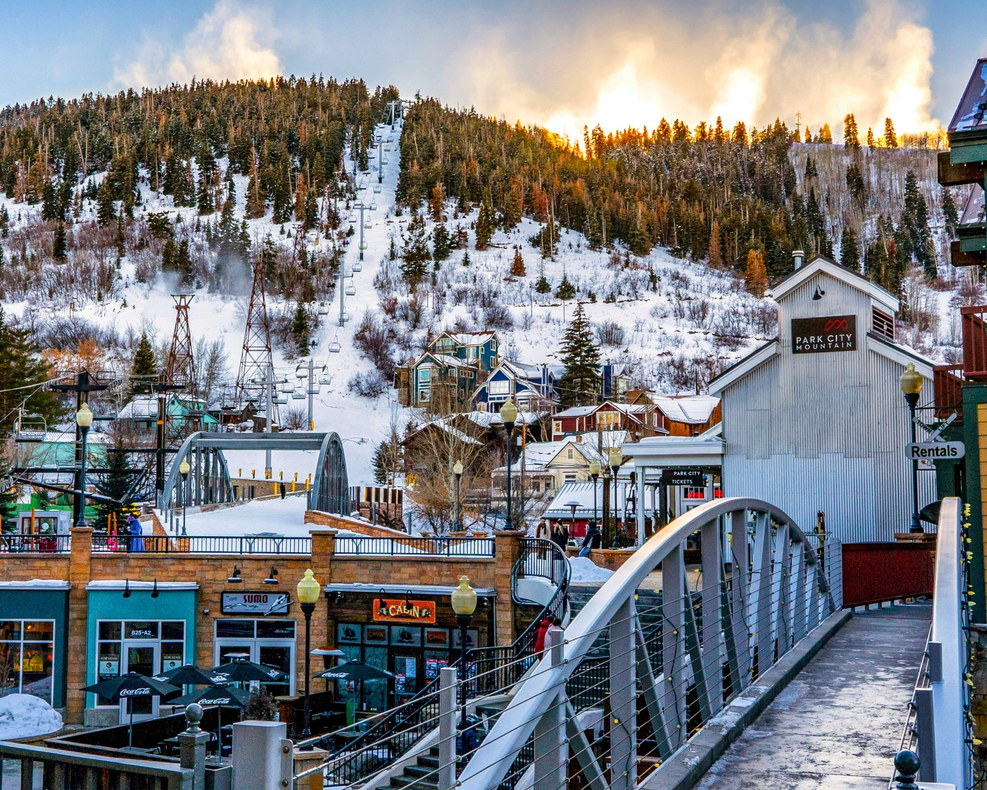
Park City town buildings, pedestrian bridge and ski lifts integrated beneath the mountain
Photo: Benjamin R. / Unsplash

A different lodging ecosystem

Park City is close. That doesn't make it the same trip.

Park City and Deer Valley are easy enough to reach from Salt Lake for one deliberate day. Repeating that commute is another matter.

Park City has its own free transit, restaurants, lodging and town-to-mountain rhythm. If most of your skiing is there, commuting back to Salt Lake every night starts defeating the point.

One Park City day from Salt Lake is a side trip. Three Park City days is a lodging question.

Pass access can make the mistake easier to rationalize. Park City Mountain sits in the Epic world. Deer Valley sits in the Ikon world. If your pass and your itinerary keep pulling you toward Park City, listen to them.

Sometimes changing hotels once is less disruptive than commuting across the Wasatch every morning.

Access is not geography

Let the pass narrow the mountains, not flatten the map

A big pass can make Utah look deceptively compact.

Ikon puts Alta, Snowbird, Brighton, Solitude, Deer Valley and Snowbasin into one access universe. Epic gives Park City its own gravitational pull. Powder Mountain sits outside both.

That is access, not geography.

A Cottonwoods-heavy Ikon trip works beautifully from Salt Lake. Add one Deer Valley day if you want it. Add Snowbasin deliberately. But trying to “maximize the pass” by changing transportation zones every morning can turn one of North America's easiest ski gateways into a windshield tour.

Let the pass narrow the mountains. Don't let it convince you they're all next door.

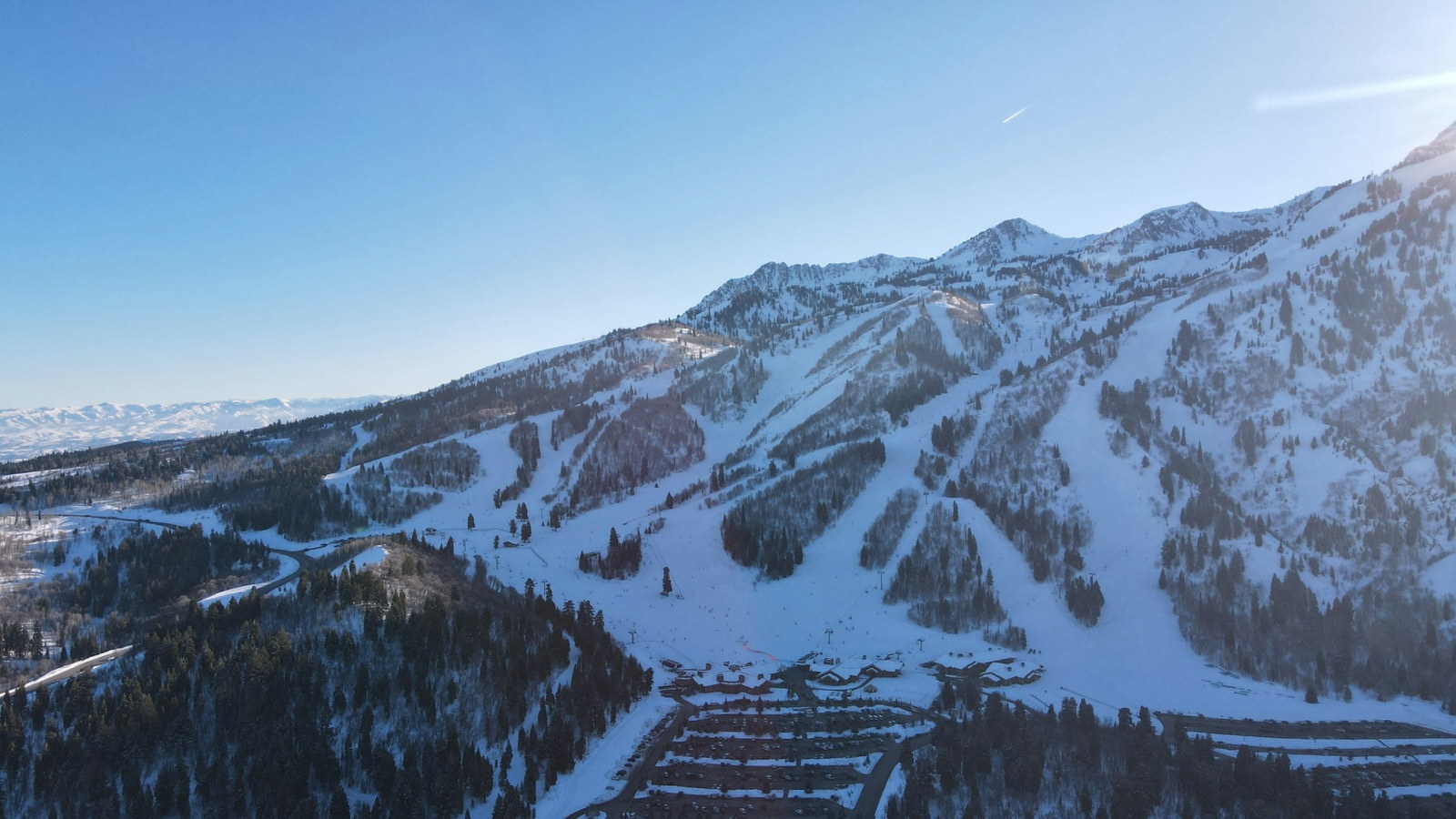
A northern Wasatch ski-area landscape with snowy slopes, lifts and mountain roads
Photo: gracias Claude / Unsplash

Northbound by design

Snowbasin is a northbound day, not necessarily a rental-car day

Snowbasin is easier to reach without a car than many visitors assume.

UTA connects the resort with the Ogden area, including service from Layton FrontRunner Station, so a Salt Lake traveler can theoretically ride north and transfer to a ski bus.

A car still makes the day cleaner, and Snowbasin's free parking lowers the penalty for driving compared with several Cottonwoods resorts.

Snowbasin does not require a car. A car just makes the Salt Lake-to-Snowbasin day easier.

That distinction matters if you're considering renting a vehicle for the entire week just to add one northern resort.

A road with its own vote

Powder Mountain is its own day

Powder Mountain looks close enough on the regional map to encourage ambition.

Then you meet SR-158.

The access road includes a sustained 14% grade, winter traction matters, and the transportation chain is completely different from anything you use for the Cottonwoods. Powder also sits outside Epic and Ikon.

Powder Mountain is not “one more Utah resort.” It is a plan.

If you want it, give it the day. Don't bolt it onto a Cottonwoods week because the pass map made Utah look small.

Rental-car reality

If you drive the Cottonwoods, legal is not the same thing as good

Utah's canyon traction rules are unusually specific.

When restrictions are active, every tire must have at least 5/32-inch tread. AWD and 4WD vehicles need qualifying M+S or 3PMSF tires on all wheels, or approved traction equipment. Two-wheel-drive requirements are stricter.

Meeting the rule should not be the end of the conversation. M+S is a broad minimum. It does not tell you how a tire behaves on ice, fresh snow, slush or cold pavement.

Legal is not the same thing as good.

If I am taking a rental into the canyons, I want the actual tire make and model, winter rating, tread condition, drivetrain and a clear answer about permitted traction devices.

That is why an exact-vehicle rental can be attractive for a ski trip. You can ask the owner what is actually mounted before booking instead of discovering it under fluorescent rental-garage lighting while everyone else is already loading the bags.

Conventional rentals can work too. The point is to know what you are getting before the canyon checkpoint, not after the storm has started.

After the boots come off

The city half of the trip should earn its place

Salt Lake works as a ski base because you return to somewhere worth being. Do not spend the whole week eating whatever happens to share the hotel parking lot.

Central 9th Market

Save the focaccia breakfast sandwich for an arrival day, rest morning or post-rush takeaway. It is worth protecting time for, but not worth missing a powder bus.

Red Iguana

Go for the mole. If it is your first visit, use the sampler to figure out which direction dinner should go. Reservations make this far less of an endurance event after a full ski day.

Crown Burger

Order the pastrami burger and get the fry sauce. This does not require a pilgrimage across the valley; choose the branch that fits the day's route.

Natural History Museum of Utah

A very good rest-afternoon option, especially because the museum sits in the foothills and explains much of the geology underneath the trip. Wednesday's later hours can work unusually well after a short ski day.

Gallivan Center

If the rink is operating for the season, skating under downtown lights is the wonderfully irrational answer to finishing a ski day with functioning legs.

The point is not to collect Salt Lake attractions after collecting Utah ski resorts. Pick one. Have dinner. Be in a city.

Put it together

A practical first Utah itinerary

For four Cottonwoods days, I would stay in Salt Lake City and make the morning boringly repeatable: breakfast, early drive to the right transit point, bus into the canyon, ski, then come back to the city for dinner.

Add one Park City or Deer Valley day if the pass and forecast justify it. Make Snowbasin or Powder Mountain deliberate northbound days rather than spontaneous logo collecting.

Fresh snow should improve the trip, not turn it into a scavenger hunt.

Match the trip

Match the Wasatch trip to the transportation

Your actual tripStart here
Alta / Snowbird / Brighton / SolitudeSalt Lake City + valley-to-ski-bus strategy
Cottonwoods, no rental carBuild around TRAX + the complete ski-bus connection
Mostly Park City MountainStay in Park City
Mostly Deer ValleyStay in Park City
Cottonwoods + one Park City daySalt Lake remains a strong base
Cottonwoods + SnowbasinSalt Lake works; plan the northbound day deliberately
Powder MountainTreat it as its own transportation day
Mixed city / ski groupDowntown Salt Lake gets stronger
Powder-first Cottonwoods tripEarly-route transit connection or slopeside lodging
Trying to ski everything because the pass allows itDelete something from the itinerary

Insider POV

A pass map is not a transportation map.

Salt Lake is one of North America's great ski gateways because serious mountains sit absurdly close to a major airport and a real city. That does not mean every Wasatch resort belongs in the same commute.

Build around the Cottonwoods if that is the trip. Move to Park City if Park City starts owning the week. Treat Snowbasin and Powder Mountain as deliberate northbound days rather than bonus logos.

Don't collect Utah resort logos. Build a ski week that survives the roads between them.

Before the reservation

Before you book

Which mountains actually own the trip? Start there, not with the pass list.

Where will you board the Cottonwoods bus? Early-route position matters.

What will parking cost if you drive? Current policies can change the equation.

Could a later ski start work? Several parking systems get friendlier later in the day.

Is Park City becoming more than a side trip? If yes, rethink the base.

Are Snowbasin or Powder Mountain genuinely part of the week? Give them their own transportation plan.

What tires are actually on the rental? AWD is only part of the winter setup.

Does the city matter to your group? If yes, let Salt Lake be more than a place to sleep.

The bottom line

Bottom line

Salt Lake deserves its reputation. Few major international airports put this much serious skiing this close to a genuine city.

Build a Cottonwoods trip around Salt Lake and reliable canyon transit. Move the base if Park City starts owning the week. Treat Snowbasin and Powder Mountain as deliberate northbound days.

The airport makes the skiing remarkably close. The roads decide whether your itinerary is.