Winter tires
Improve available traction for braking, turning and acceleration through winter-focused compounds and tread.

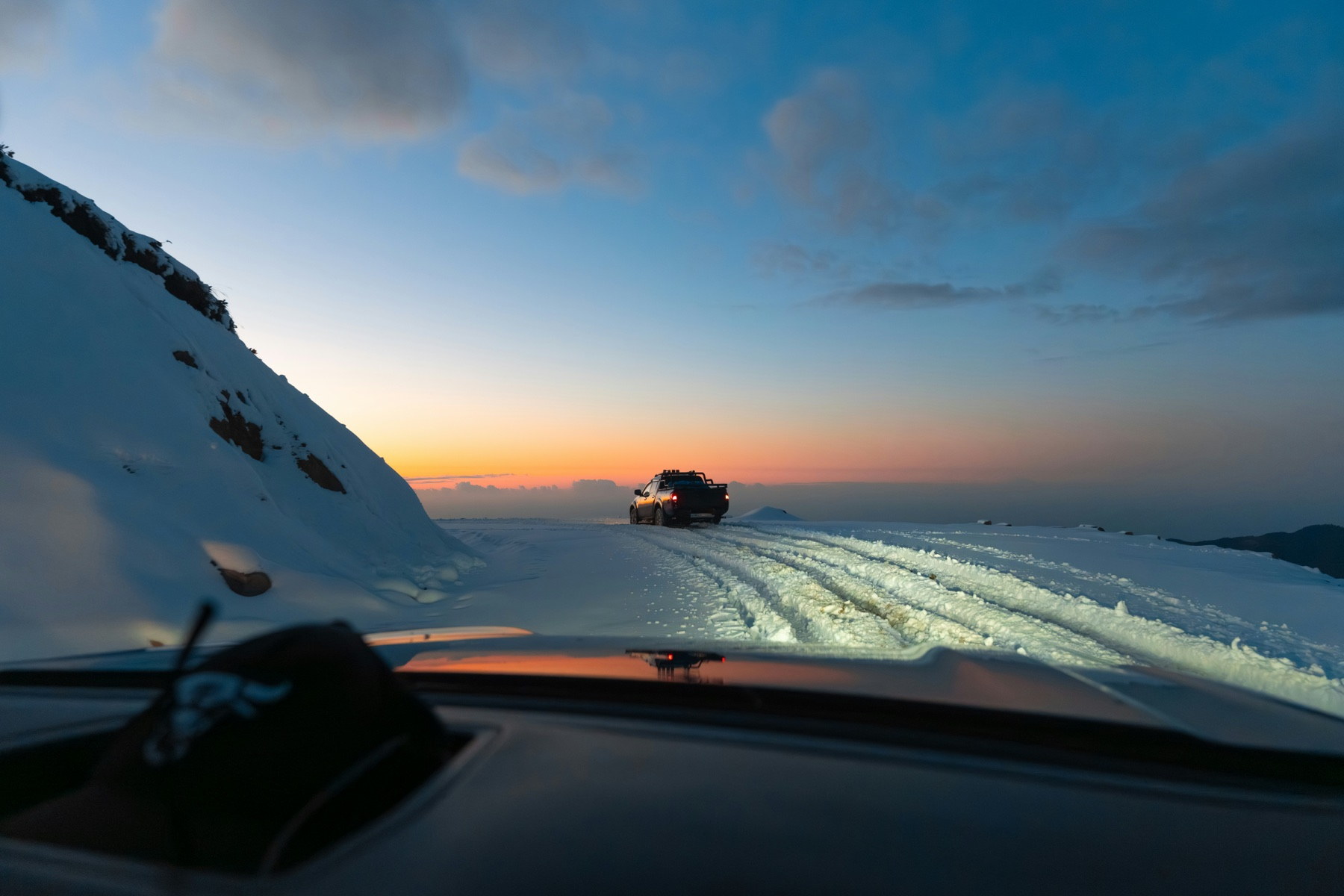
Winter driving
AWD helps you get moving. Winter tires are what help you stop and turn.
Ski parking lots are full of AWD crossovers riding on ordinary all-season tires. A lot of drivers assume the AWD badge means the car is ready for a storm. That is the misconception.
AWD can make a huge difference pulling away from an icy intersection or climbing a snowy grade. Pair it with four proper winter tires and you have the setup we would choose for serious ski travel. But AWD is not a substitute for winter tires.
If we had to choose between an AWD vehicle on ordinary all-seasons and a front-wheel-drive car on proper winter tires for regular drives to the mountains, we would start with the tires. The reason becomes obvious once you separate getting moving from stopping and turning.
The PassTracks take
If you regularly drive toward ski storms, four proper winter tires are a more important first winter upgrade than choosing AWD over FWD. The ideal setup is both. AWD still matters for climbing, slick starts and deeper snow. It simply cannot create braking or cornering grip the tires do not have.
If you trust AWD to get you safely to the mountain, read this first.
AWD is good at making a car feel capable in snow. Pull away from a stop, climb a slick hill or accelerate onto a snowy road and the advantage is obvious.
The problem is that the confidence arrives before the limitation does.
When you brake or turn, AWD cannot manufacture grip the tires do not have. That is why the tires underneath the car matter more than many AWD owners realize.
Consumer Reports found that AWD and 4WD improve straight-line traction while accelerating, but tire choice remains central to road holding and braking.1 In CR's controlled 2015 snow demonstration, AWD helped vehicles get moving but did not aid braking and some AWD vehicles on all-season tires struggled through corners.
On a separate test day and under different snow conditions, CR compared an AWD Honda CR-V and a front-wheel-drive Toyota Camry, both on new winter tires. Both stopped from 60 mph in roughly 300 feet. That historical test is an illustration, not a promise that every modern vehicle and tire combination will stop in the same distance.
12–0 mph braking on glare ice
Same 2012 Honda Civic EX. Same surface. Different tires.
Source: Tire Rack controlled test2
Tire Rack used the same 2012 front-wheel-drive Honda Civic EX and measured 12-to-0-mph braking. The winter tire stopped 18.5 feet shorter, a 34% improvement. It also completed the test corner at 11 mph; the all-season needed about 8 mph to avoid running wide. Nothing about the drivetrain changed. The tires did. This older tire-pair result should not be treated as a universal percentage for every current model.
Explore winter tires ↗Source: National Highway Traffic Safety Administration.3 Snow or sleet was present at the time of these crashes. The NHTSA figures do not establish that winter weather or tire choice caused each crash.
Most drivers try to avoid the storm. Skiers set an alarm because it snowed.
A ski trip may spend hours on dry highway, then move through wet or slushy roads before reaching snow and ice only near the mountain. Those final miles can include sustained grades, shaded icy corners, steep approaches and descents, packed snow, freeze-thaw surfaces and early-morning roads before full treatment. The fact that only part of the drive is snowy does not make winter capability less important.
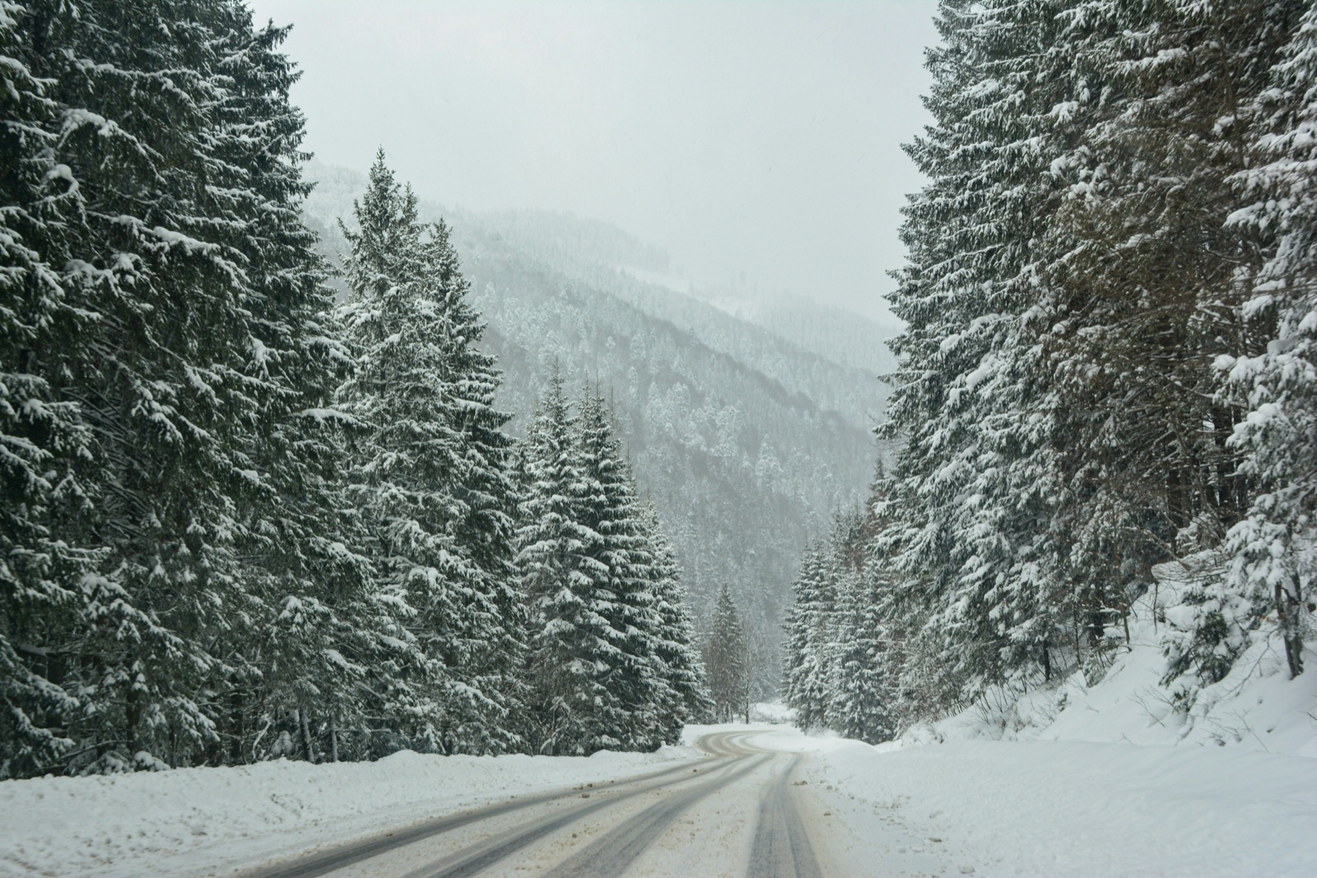
Improve available traction for braking, turning and acceleration through winter-focused compounds and tread.
Primarily helps distribute propulsion, pull away on slick surfaces and climb slippery grades.
Helps the vehicle physically pass through deeper unplowed snow without bottoming or plowing.
The ideal ski vehicle combines all three. The mistake is buying one and assuming you got the other two for free.
Sometimes. But they are not the setup we would choose for regular mountain travel.
All-weather tires make the most sense for someone who lives somewhere with real winter but mostly drives on flat, maintained roads and does not expect to deal regularly with icy mountain approaches, sustained grades, steep descents or poorly plowed resort roads.
If your winter driving is mostly local commuting in snow and you can avoid the mountains when conditions deteriorate, a good all-weather tire can be a reasonable compromise.
But that is exactly what it is: a compromise. For skiers who deliberately drive into the mountains when it is snowing, we would choose dedicated winter tires.
The all-weather model was materially better than the conventional all-season in this test. The dedicated winter still delivered the strongest winter performance. These are specific tested models, not category averages.
The Three-Peak Mountain Snowflake symbol is meaningful. An all-weather tire earns it by meeting a standardized snow-acceleration traction requirement. A conventional M+S marking is based on tread geometry and does not require the same performance test.
But 3PMSF does not certify equal braking, cornering or ice performance across every tire carrying the symbol. Tire Rack's current explanation and testing show that dedicated winter tires can retain an advantage when conditions become more demanding.5 Treat the snowflake as useful evidence, not the end of the research.

Winter capability changes as a tire wears. In testing updated in December 2025, Consumer Reports found that half-tread all-season tires lost about 14% of their measured snow acceleration traction and produced roughly 7% longer wet stopping distances than full-tread versions of the same tires.6
CR recommends beginning to shop around 4/32 inch and planning so winter tread does not fall below that point midseason. That is guidance, not one universal legal replacement threshold. Rules vary by jurisdiction and route. A skier planning to drive into storms should inspect remaining tread, tire age and condition, and all four tires, not merely confirm that “winter” appears on the sidewall.
The PassTracks recommendation
If your winter driving includes mountain grades, packed snow, ice, early-morning roads and driving toward storms, this is winter-tire territory.
For regular ski travel, dedicated winter tires are the setup we recommend.
The ideal vehicle adds AWD or 4WD and enough ground clearance for the roads you actually drive. But the tires come first.
See winter tires that fit your vehicle →When CDOT activates the Passenger Vehicle Traction Law, current requirements include qualifying AWD/4WD tire configurations with at least 3/16-inch tread, or approved traction devices. Under the Passenger Vehicle Chain Law, every vehicle must use chains or an approved alternative device.7
Under R2 controls, AWD/4WD vehicles are exempt from installed chains only with snow-tread tires on all four wheels, and must still carry traction devices. R3 requires them on every vehicle.8
Winter tires or chains are required on most designated routes from October 1 through April 30; requirements on select routes end March 31.9
Most Québec-registered vehicles must use winter tires from December 1 through March 15.10
Check current requirements for your route before leaving.
The PassTracks winter-driving rule
You already paid for the car. Make sure the four pieces touching the road are ready for the trip.
AWD can make a ski vehicle substantially more capable. Dedicated winter tires make that capability useful when you have to stop and turn.
The ideal setup is both.
But if your AWD crossover is still on ordinary all-seasons because you assumed four driven wheels solved winter, start underneath the car.