

Trip planning · Gear & packing
Skiing East vs. West: What Gear Should You Actually Bring?
A certified ski instructor shares what really changes between Eastern and Western skiing, what he brings, what he rents, and what isn’t worth buying.
Photo: Anand Yadav / Unsplash.
You book a trip to Utah. The powder videos start finding you. Before you’ve sorted out the airport transfer, the skis you were perfectly happy with last weekend suddenly look inadequate.
It’s an expensive way to pack.
I teach in New England and have skied narrow, 72 mm skis and wider, 99 mm skis across California, Utah, Colorado, Washington, Nevada, and Wyoming. Those trips have included plenty of days when it hadn’t snowed in a while.
Western mountains offer bigger horizons, unfamiliar terrain, and the possibility of the powder day you’ll mention for the next ten years. They do not issue fresh snow with your boarding pass.
You probably already own most of what you need. The useful questions are more specific: Will your skis suit the conditions? Should you bring them? Can you see when the weather closes in? And will everyone still have warm feet after lunch?
Those are the problems worth spending money on.
Personal picks
The instructor’s shortlist
Four personal picks that have earned their place in my ski-travel routine. The reasons come below; the shopping shortcuts are here.
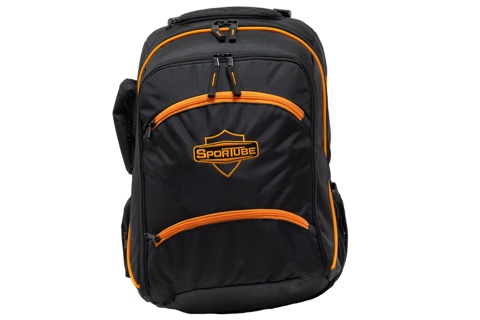
Sportube Overheader boot backpack
My everyday teaching and travel bag, still going after 15-plus years
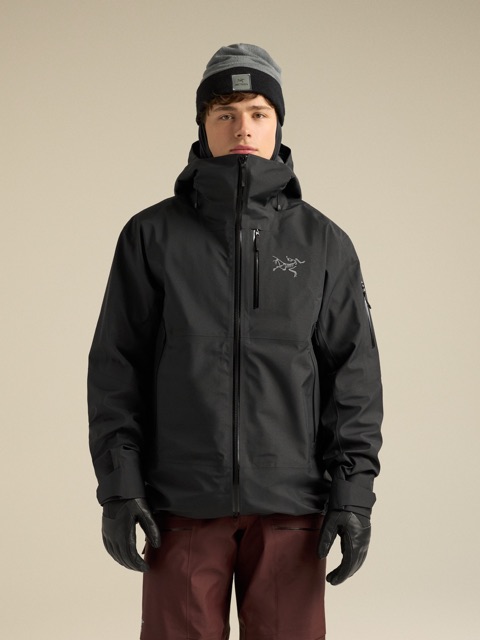
Arc’teryx waterproof shells
One adaptable outer layer, not separate wardrobes for each coast
Choose skis for the snow, not the postcard

A dry week in Utah can still be a wonderful ski trip. In my experience, its packed snow is often much more forgiving than New England hardpack. If your usual reference is a thaw, a refreeze, and a busy Saturday, “firm” out West may come as a pleasant surprise.
Start with the forecast, not the powder videos. During a dry spell, bring the familiar skis you enjoy on groomers. If fresh snow is coming, consider a demo around 100 mm and talk through the options with the shop.
On icy New England days, I prefer something around 70 mm underfoot. For mixed conditions, my Head Kore 99 has served me well across the West. Width matters, but so do shape, construction, length, and the skier standing on them.
A 130 mm powder ski is a different tool. On very wide skis, I find myself doing less and slowing the timing. That can be fun to explore, but it’s also an adjustment to make on a short trip.
I’ve watched PSIA clinicians ski powder beautifully on slalom race skis. That doesn’t make slalom skis the ideal powder choice. It does put the shopping conversation in perspective.
Don’t buy confidence by the millimeter.
Don’t check your boots
My boots come into the cabin with me. So does my helmet. The skis can take their chances below.
I’ve had enough ski bags arrive late to be stubborn about this. On my last Vail/Breckenridge trip, our skis didn’t turn up until the evening of our departure.
They made it to Colorado. They just missed the skiing.
Fortunately, we had our boots.
We rented demo skis, clicked into boots we knew, and enjoyed the trip. The airline reimbursed the rentals, which was a decent silver lining. But the reason the whole episode remained an inconvenience rather than a miserable holiday was that our boots were with us.
Rental boots are generally crap compared with a pair that fits you properly. Wrong fit, wrong flex, and suddenly you’re spending the morning arguing with your equipment instead of skiing.
I’ll happily experiment with demo skis. My boots are not an experiment.
A proper cabin boot bag makes keeping them with you much easier. Pack it before departure and check its loaded dimensions against your airline’s allowance. Sportube markets the current Overheader for carry-on travel, and this bag has been in their product line for many years… for a reason. It’s a beast when it comes to durability and convenience.
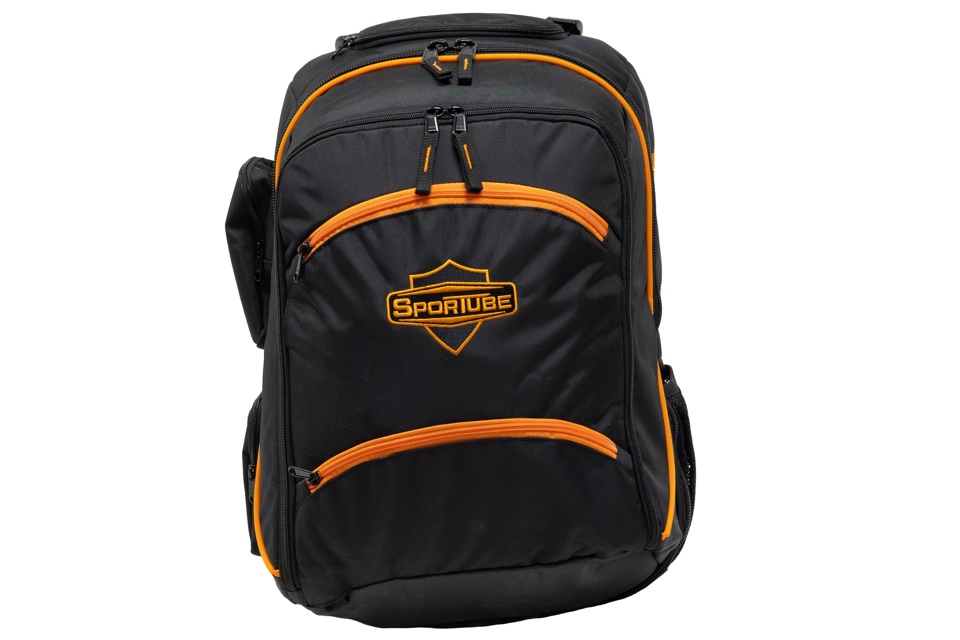
15+ YEARS OF USE
Sportube Overheader: the boot bag I haven’t needed to replace
I’ve had the same Overheader for more than 15 years. It has crossed the country and the Atlantic several times, and it’s still the bag I take to the mountain every week when I’m teaching.
No rips. No zipper problems. It just keeps coming skiing.
That’s what I want from a boot bag: something that handles airports, ski trips, and another week of hauling gear without giving me another thing to fix.
Bring your skis or rent good ones
My Western trips are usually three or four ski days. For one or two days, I’m more inclined to rent. As the trip stretches toward four to seven days, bringing my own skis becomes more attractive.
There isn’t a magic break-even point. Compare the full demo quote with the additional round-trip baggage cost, then consider the convenience of traveling without skis.
Check your airline’s ski-equipment allowance, weight limits, and fees for the fare you booked. Don’t assume a ski bag automatically costs extra just because it’s long.
Reserve the quality. Choose for the conditions.
I reserve ahead so I know the shop has a high-performance or demo fleet. Usually, I choose the actual skis when I arrive.
That gives me options without committing to a particular width before the forecast has turned into weather.
Ask what the reservation guarantees, which models and lengths are likely to be available, and whether you can exchange skis during the trip. Tell the shop what you normally ski, where you plan to spend your time, and that you’re bringing your own boots.
I enjoy trying higher-end models. I’m not looking to save a few dollars and spend the first morning wondering where the edges went or why I’m skiing a noodle.
When your own skis are coming
I prefer a hard case. Just remember that you’ll be the one hauling it through the terminal and fitting it into the rental car.
Check the weight, check the space, and leave yourself a hand for coffee.
OWNED AND USED
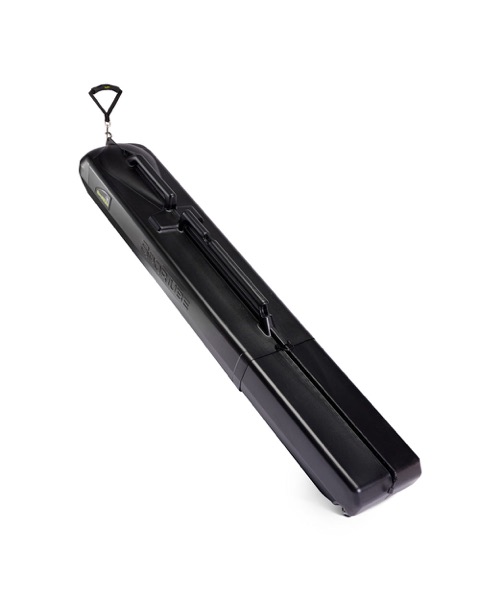
Sportube hard cases: apparently, one wasn’t enough
I own three: two doubles and a single. That probably tells you where I stand on the hard-case question.
The Sportube Series 2 carries two pairs of alpine skis and poles in an adjustable, wheeled shell. Allow roughly 12 pounds for the empty case in your baggage calculation.
A hard case won’t persuade the airline to put your skis on the right plane. We’ve established that. But protecting them during the journey is one thing you can control.
Your skis aren’t the only equipment to check
Before booking ground transportation, make sure the vehicle will fit your ski case and everyone’s luggage. Then ask the more important question: what tires are on it?
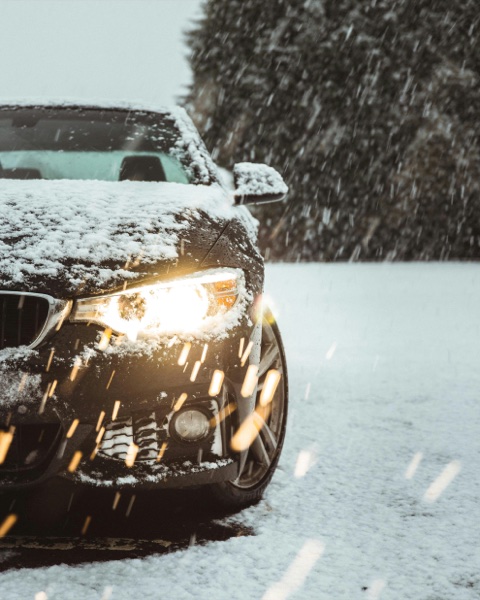
A mountain airport is not a winter-tire guarantee. Major U.S. rental companies commonly supply all-season tires. Avis says snow tires aren’t available at its U.S. locations; Enterprise says its U.S. vehicles have all-season tires. Booking an SUV doesn’t change that.
That’s why Turo has worked well for me: I can choose the actual vehicle and speak with its owner before booking. I want the tire setup settled before landing, not a headache at the rental counter with luggage piled around me and a mountain drive ahead.
“SUV or similar” tells me remarkably little about the bit touching the snow.
Ask for the tire make and model, get confirmation of what will be fitted for your dates, and check at pickup. Turo requires its “Snow tires” feature to correspond to tires bearing the Three-Peak Mountain Snowflake designation; don’t treat the platform itself as a guarantee of a particular winter-tire setup.
One good shell. Change what’s underneath.
I don’t maintain separate Eastern and Western ski wardrobes. Layering is layering. Its beauty is that you can adapt it.
Some of my coldest skiing days have consistently been in the Northeast. I’ve ended up with seven layers on top. That’s a memory of a very cold day, not a packing requirement.
Out West, I adjust what’s underneath and how much ventilation I need. The outer-layer job stays the same: keep the weather outside and leave room to move.
For someone who skis regularly, a quality waterproof shell is one of the first clothing investments I’d make. Try it with your insulation and helmet. Reach forward, bend, and check that you can operate the vents without a small expedition.
MY LONG-STANDING BRAND CHOICE
Arc’teryx shells: expensive, but I keep coming back
Arc’teryx has been my favorite since the early 2000s. My shell doesn’t get an easy life.
I ski tight New England trees. Kids hang onto my jacket during lessons. My sons’ race-ski edges manage to find it a few times a season. Through all of that, my shell has never ripped, and I haven’t had a zipper fail.
That’s the quality I’m paying for. A decade is the sort of useful life I want from a good shell, and I’d rather keep one I like than keep replacing one I don’t.
And yes, wash it. Follow the garment’s care instructions and maintain its water repellency. An expensive jacket still needs looking after.
Cold feet can end a perfectly good ski day
Warm hands won’t rescue someone whose feet are freezing. This is where I have another recommendation I’m particularly enthusiastic about.
USED FOR TEACHING AND FAMILY SKI TRIPS
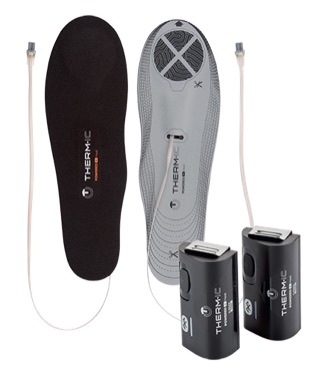
Therm-ic heated insoles: save the ski day
If you run cold, or travel with someone who does, Therm-ic is one of my favorite equipment recommendations.
I use it myself. Teaching means hours outside regardless of the thermometer, and warm feet are considerably more useful than another inspirational speech about embracing winter.
My wife used to complain of cold feet even when it was around 30°F. I bought her a pair, and that complaint disappeared.
That’s an upgrade I appreciate. Not something that makes the equipment look more impressive, but something that makes the day better.
The Heat Flat + C-Pack 1300 Bluetooth kit combines thin heated insoles with rechargeable batteries and adjustable heat.
They’re not a necessity for everyone. But after paying for flights, lodging, and a pass, keeping someone comfortable enough to enjoy the trip deserves consideration.
Save the ski day. Possibly the vacation.
Goggles: change the lens, not your entire setup
I haven’t found that Eastern and Western skiing require fundamentally different goggles. I do carry three lenses, including clear.
Don’t dismiss the clear one as something you’ll only use at night.
It earns its place when it’s absolutely dumping and the light disappears. The snowfall is already making things difficult to see. I don’t need a dark lens making the scene dimmer.
Clear isn’t glamorous in a product photograph. On the right storm day, it can be the lens you’re happiest you packed. Oakley lists its conventional Clear lens for snow and overcast conditions, with 90% visible light transmission.
The other half of the decision is how easily you can change lenses.
I favor magnets or a straightforward snap-in system, with secure attachment once everything is seated. Oakley’s Line Miner Pro, for example, combines magnetic alignment with mechanical locks. That is the kind of arrangement worth examining.
I like Oakley and Wildhorn, but fit and the lens system come before the logo. Check that the lenses you need actually exist for the model you’re buying.
And try the goggles with your helmet. They should meet neatly at the brim, without an exposed strip of forehead or the helmet pushing the goggles down onto your nose.
That forehead gap? Very Jerry. Also cold.
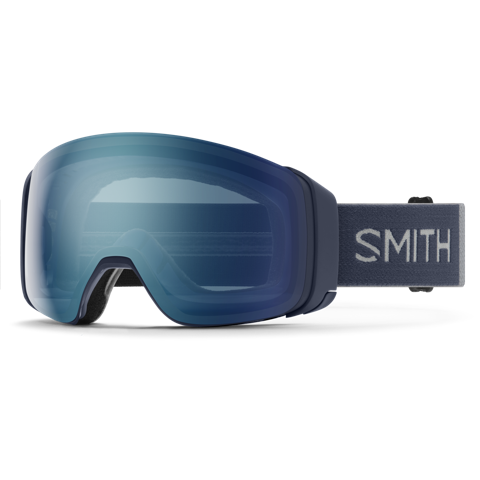
GEAR WORTH CONSIDERING · QUICK-CHANGE GOGGLES
Sunshine or snowfall. A quick lens swap.
If your current goggles fit well, an additional compatible lens may solve the problem. If changing that lens requires ten minutes and language unsuitable for the ski school, a better system deserves a look.
Prioritize fit, secure attachment, and easy swaps. Don’t accidentally order a replacement lens for a different size of the same goggle family.
Explore ski goggles at Backcountry →
Find compatible replacement lenses →
Check the destination, not just the word “West”
I don’t pack a completely different bag for every destination. I check the forecast, then adjust the layers, gloves, and lenses.
| Where you’re heading | What to check |
|---|---|
| Colorado Rockies | Sleeping elevation, upper-mountain temperatures, wind, and sun exposure |
| Utah Wasatch | Recent snowfall, the coming forecast, and whether your plans lean toward groomers or off-piste terrain |
| Tahoe and the Sierra | Storm temperatures, snow levels, and the difference between the base and upper mountain |
| Washington and Whistler | Wet-weather preparation, visibility, and somewhere to dry equipment overnight |
A resort’s annual snowfall total won’t tell you what to pack for next Tuesday. Use the mountain forecast, recent conditions, and your actual itinerary.
A personal extra for high-altitude days
I sometimes use Boost Oxygen after exertion at altitude, particularly after a bootpack. I’ve found that a few breaths help take the edge off that out-of-breath feeling.
It’s a small personal extra, not protection against altitude illness. It doesn’t replace acclimatization, and breathlessness that persists at rest is a reason to stop and seek medical help, not take another puff and keep climbing.
Buy it for the destination. Don’t put it in your flight luggage. The FAA prohibits recreational oxygen in both carry-on and checked baggage.
Backcountry sells Boost Oxygen, so check there before paying mountain-shop prices. Confirm ground delivery to your hotel’s address, ask the hotel to accept it, and order with time to spare. Shipping restrictions apply; don’t assume a delivery arrangement available in the contiguous United States will also work for a Canadian trip.
This guide is about resort ski travel. Leaving controlled resort terrain involves separate avalanche, equipment, and training decisions.
Before you zip the bag
The big decisions are made. This last check is about the small things that can still waste a morning.
- Carry-on: fitted boots, helmet, goggles, and protected spare lenses, packed within your airline’s allowance.
- Warmth: shell, appropriate layers, dry socks, afternoon gloves, and the Therm-ic charger if you use heated insoles.
- Demo reservation: equipment category, pickup location, exchange policy, and confirmation that you’re bringing your own boots.
- Ground transportation: actual vehicle, verified tire setup, and enough room for the ski case.
- Last look: mountain forecast, packed baggage weight, and somewhere to dry everything at night.
Flying with Therm-ic? Disconnect the rechargeable battery packs and keep them in your carry-on, with the connectors covered or protected in separate pouches. If that bag gets checked at the gate, take the battery packs out and keep them with you.
I also carry KT tape. Sometimes I use it before skiing; sometimes when a familiar minor ache appears. It helps me feel more comfortable and confident. How much of that is physical and how much is psychological, I couldn’t tell you. It earns a small space in my bag, not permission to ignore persistent pain.
The last run
I’ve brought skis. I’ve rented skis. Once I’m on snow, I usually have a blast.
Good preparation removes distractions. It means spending less time thinking about your feet, your luggage, or the lens you left at home, and more time noticing why you came: the next ridge, the unfamiliar trail, the light moving across a mountain you don’t know yet.
Some trips deliver powder. Others deliver four clear mornings and excellent turns on the skis you already trusted.
Both count.