Stay in the mountains
Best when skiing is the trip.
For several consecutive ski days, especially on weekends, mountain lodging buys back sleep, flexibility and fewer opportunities for I-70 to hijack the morning.

Trip planning · Colorado
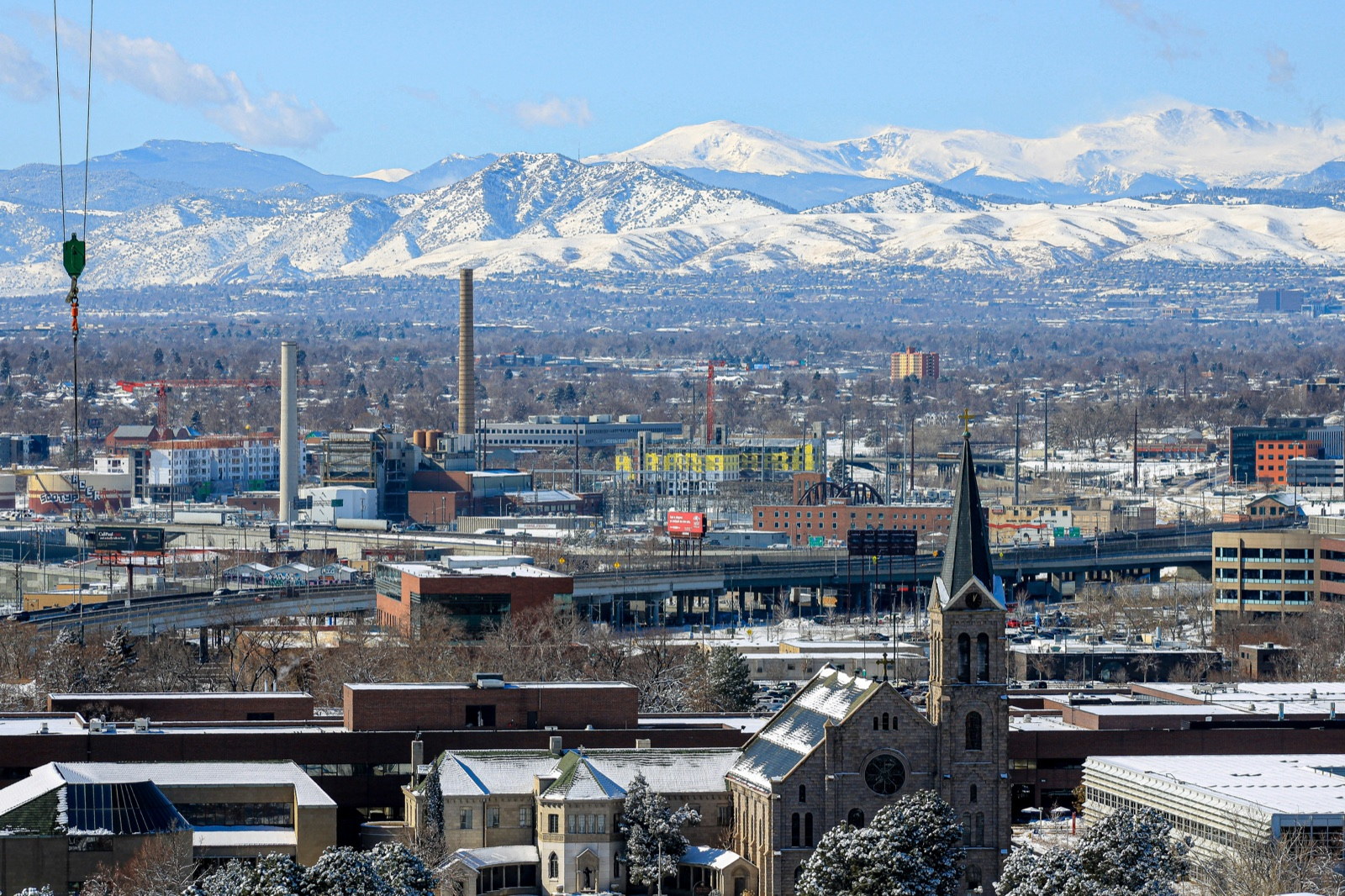
Denver is the gateway. That does not automatically make it the base.
On a map, staying in Denver can look perfectly sensible: cheaper hotel, straight shot west, plenty to do after skiing. Then winter gets involved.
I-70 can be easy, slow or completely uncooperative depending on traffic, weather, crashes and timing. For a ski-first trip with several consecutive mountain days, the cleaner move is usually to cross the foothills once and sleep closer to the skiing.
If Denver is part of the vacation too, there is a better answer than commuting between the two every day. Split the trip.
The decision at a glance
Best when skiing is the trip.
For several consecutive ski days, especially on weekends, mountain lodging buys back sleep, flexibility and fewer opportunities for I-70 to hijack the morning.
Best when skiing is one part of a Denver trip.
Denver can work for a single ski day, particularly midweek, or when you have a specific train or bus plan.
Best when you actually want both.
Give Denver its own nights. Give the ski block its own mountain base.
If you want Denver too, visit Denver. Don't commute from it.
The distance problem
The mileage is not the problem.
The variability is.
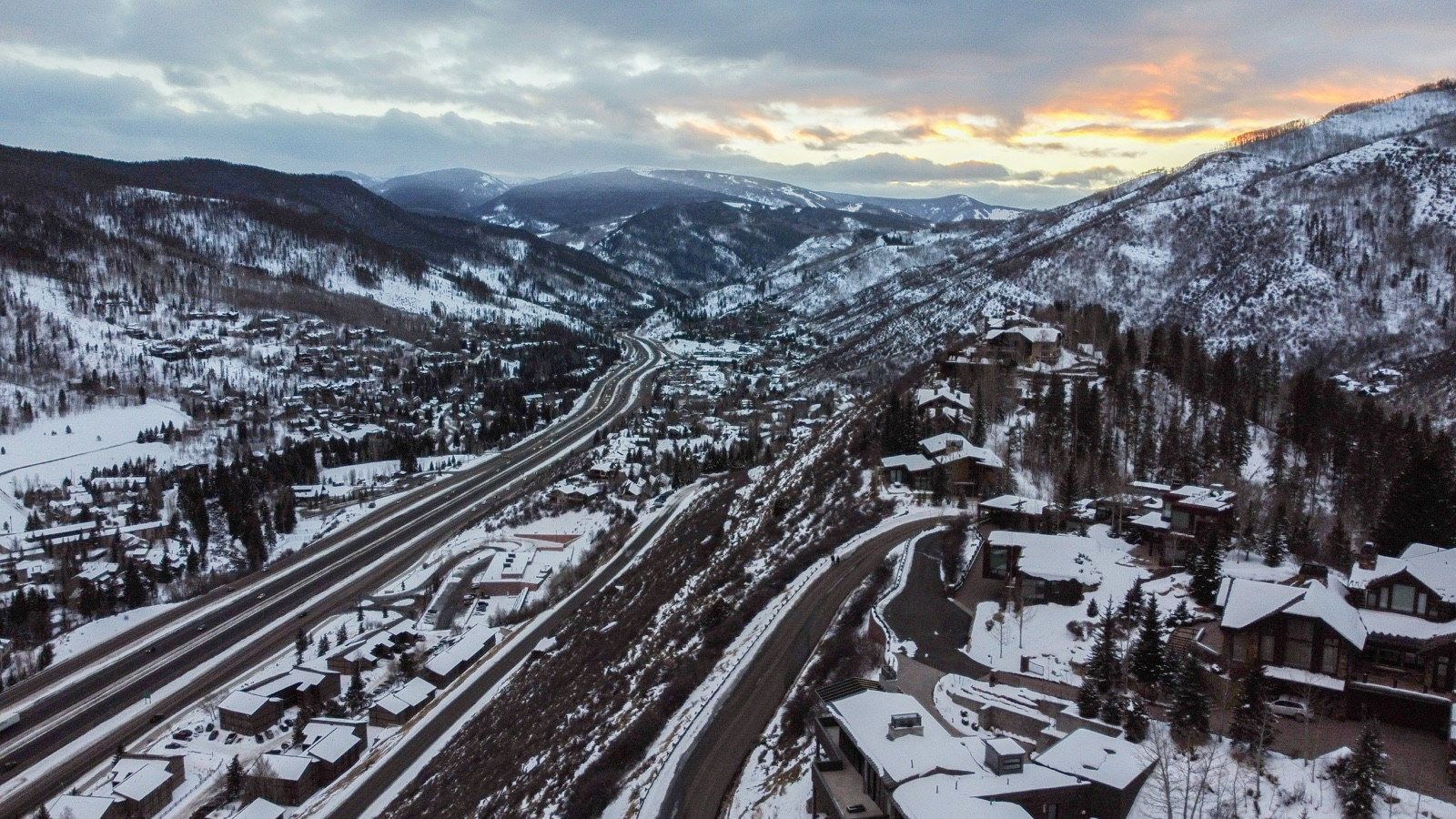
Colorado's I-70 Mountain Corridor carries ski traffic through high-elevation terrain where weather, crashes and road restrictions can quickly change the trip. A clean navigation estimate tells you what the drive looks like when nothing interesting happens. Winter occasionally has other ideas.
Staying in the mountains turns that uncertainty mostly into an arrival-and-departure problem. Staying in Denver puts it between your bed and the lifts every morning. That is the distinction that matters.
Compare the full morning
Denver lodging can absolutely be cheaper.
But the comparison is not simply:
Denver hotel vs. resort hotel
It is:
Denver hotel+ daily mountain commute
versusthe full range of lodgingwest of the foothills.
The cheaper room may come with an earlier alarm, more fuel, more winter driving, another parking problem and less ability to react when conditions change.
Mountain lodging buys something booking sites do not put in the nightly rate: time near the thing you came to Colorado to do.
That still does not mean paying whatever Breckenridge wants for ski-in/ski-out. There is a lot of Colorado between slopeside luxury and sleeping in Denver.
When you ski matters
A Tuesday morning and a powder Saturday are different transportation problems.
Ski-season traffic has familiar directional patterns, but weather and incidents can overwhelm them quickly. Friday afternoons and weekend ski mornings can stack westbound traffic; the return migration builds eastbound later in the weekend.
You can leave extremely early. You can linger over dinner until traffic eases. You can spend the afternoon watching road conditions like a commodities trader.
Those are legitimate strategies. They are also evidence that the road has become part of the vacation.
For Saturday-and-Sunday skiing, staying in Denver is a much harder bargain to justify.
The missing middle
A common planning failure goes like this: Denver looks too far. Breckenridge Village looks too expensive. Back to Denver. There is a middle.
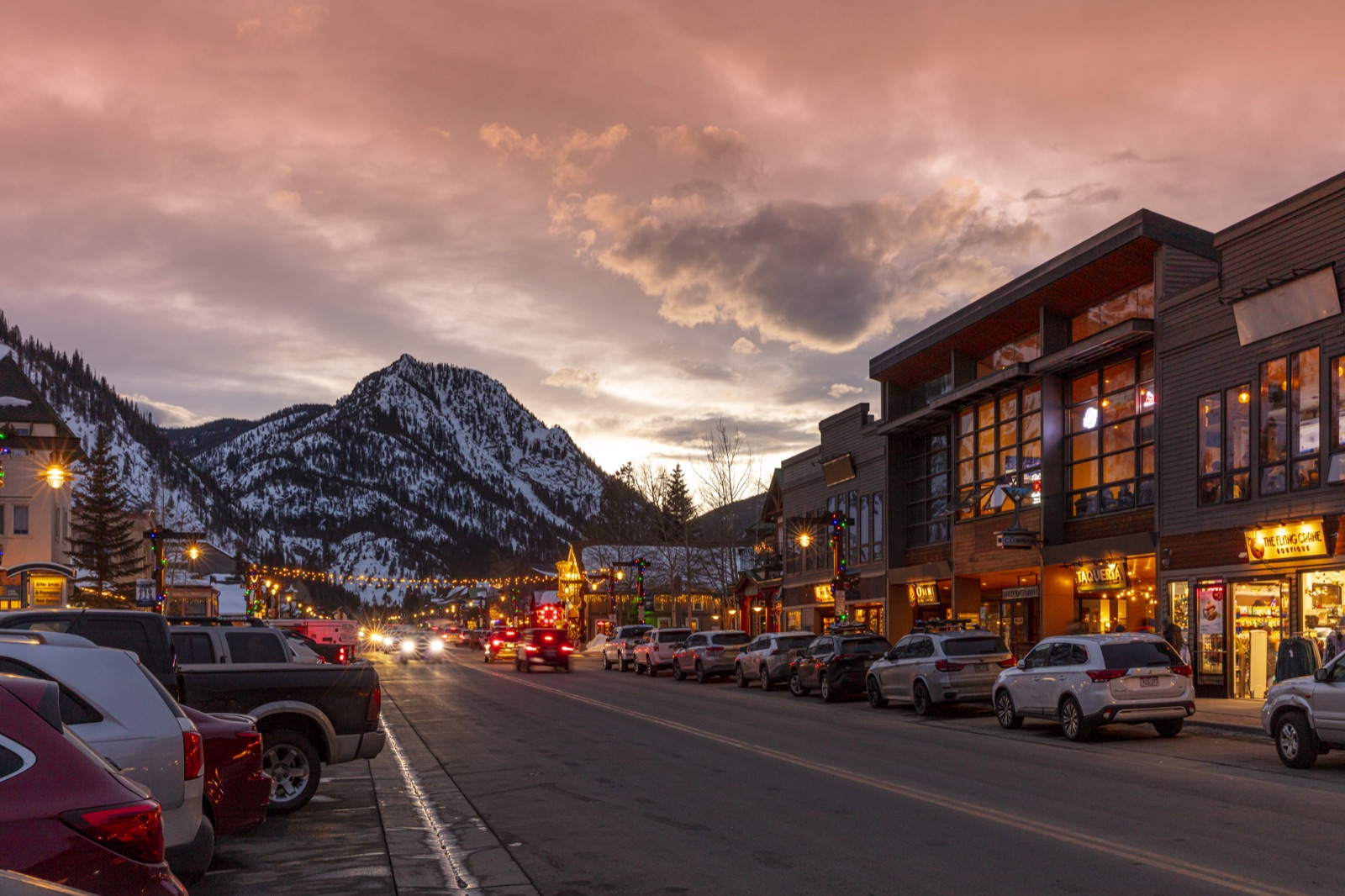
We have a separate Frisco vs. Dillon vs. Silverthorne guide because choosing among them is its own problem.
First decide whether you should sleep in the mountains at all. Then choose the right mountain base.
The clean compromise
Changing hotels once can be less disruptive than crossing the same mountain corridor every day.
Two patterns work particularly well:
Denver first
Denver → Mountains → DEN
Denver first: city night or two, then move west for the ski block.
Mountains first
DEN → Mountains → Denver
Mountains first: ski first, then finish in Denver before flying home.
The second can also simplify an early departure from DEN without sacrificing a mountain night in the middle of the ski trip.
Move once instead of commuting repeatedly.
That's the idea.
Without the rental counter
A Denver ski day does not have to mean renting an SUV and personally joining the migration west.
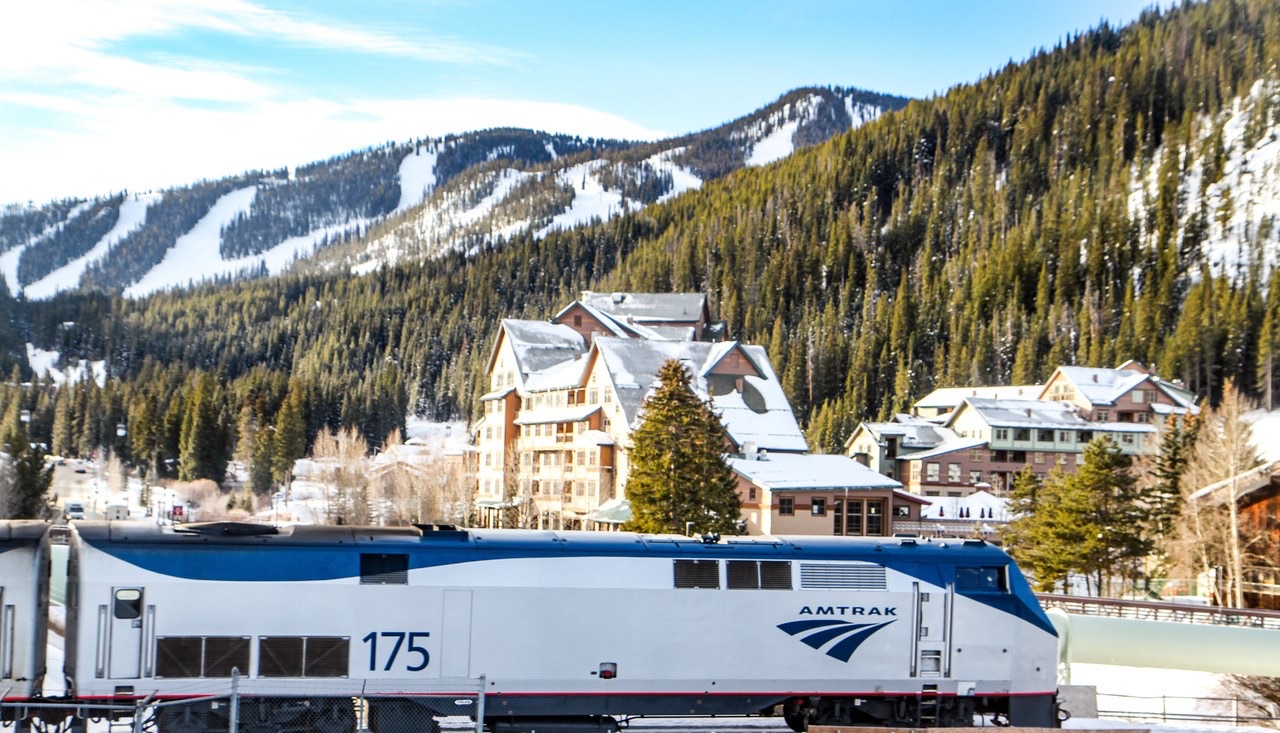
The I-70 exception
Amtrak's Winter Park Express runs from Denver Union Station directly to Winter Park Resort and returns for the 2026–27 season.
Winter Park is not an I-70 resort, which is exactly why it belongs here as a useful exception. If your goal is one Denver-based ski day without renting a car or gambling on mountain traffic, it may be the cleanest option in the region.
One of the easiest ski days from Denver is the one that doesn't use I-70.
Check the final operating calendar before building the trip around it.
Colorado's seasonal Snowstang service has connected Denver with ski areas including Copper, Breckenridge, Loveland and Arapahoe Basin.
The 2026–27 schedule still needs to be confirmed before publication, but when the service lines up with your dates, it can turn a Denver ski day into someone else's driving problem.
Pegasus serves the I-70 corridor from Denver through places including Frisco, Vail and Avon.
It is particularly interesting for a different reason: it can help you get to a mountain base without keeping a rental car for the entire trip.
DEN connects to Union Station on RTD's A Line, and from there regional transportation can take over. Mountain lodging and rental car are separate decisions. Treat them that way.
Driving west
An “SUV or similar” reservation is not a winter-driving plan.
Colorado's traction rules can require qualifying tires, sufficient tread and, under more severe conditions, chains or another approved traction device. So when you rent, look beyond AWD and the badge on the tailgate.
One option worth checking is a peer-to-peer rental marketplace such as Turo. You choose a specific vehicle rather than a broad rental category, and you can message the owner before booking about the exact setup: tire make and model, winter rating, tread condition, AWD or 4WD, chain compatibility, ski capacity and airport handoff.
That has worked well for me on ski trips. I can confirm that the actual vehicle has the winter tires I want before I book it, rather than arriving at a rental counter and hoping something suitable is still available.
That certainty matters. Traditional rental companies often do not guarantee winter tires, and the vehicle you reserved may ultimately be whatever fits the category when you arrive.
A route-specific base
Georgetown can be a smart base for Loveland. It is less convincing as a generic cheap alternative for skiing farther west.
If Copper, Breckenridge, Keystone or other Summit County mountains dominate the trip, Georgetown can still leave a significant piece of I-70 between the hotel and the lifts.
The broader rule is more useful:
Cheap lodging only helps if it is cheap in the direction you're actually going.
Departure-day margin
You can absolutely ski on departure day. What you should not do is attach a tight flight to an itinerary that requires a mountain highway to perform exactly as scheduled.
A short morning before a late flight can be reasonable. A full weekend ski day followed by a tight evening departure gives weather, traffic and road incidents too much leverage over the trip.
A late flight can work. A tight flight is a bet on I-70.
Build margin accordingly.
Insider POV
If skiing is the reason you flew to Colorado, sleep near the skiing. If Denver is part of the vacation, give it its own time. If you're skiing once, Denver may be exactly the right base.
The point is not that mountain lodging always wins. It's that the hotel should serve the trip, not fight it.
Seven practical questions
One Denver day trip and four are different plans.
That can materially change the commute.
Solve your real trip, not the imaginary one with six resorts on it.
If yes, consider giving it dedicated nights.
Check Winter Park Express, Snowstang, Pegasus and the DEN-to-Union Station connection for your dates.
Reservation category is not enough.
If the answer is none, fix that before booking.
Bottom line
For several consecutive ski days, especially over a weekend, sleeping in the mountains usually removes more friction than a cheaper Denver hotel saves.
Denver makes more sense when skiing is just one piece of the trip. And if you genuinely want both city and mountains, don't force one hotel to do two jobs.
Visit Denver. Ski the mountains. Cross the foothills once.
Before you fly, check what to bring for a Western ski trip.