COLORADO · SUMMIT COUNTY

Frisco, Dillon or Silverthorne: where should you stay for a Summit County ski trip?

Frisco buys walkability. Dillon buys east-side ski access. Silverthorne buys practicality.

The three towns look close enough on a map to seem interchangeable. They are not.

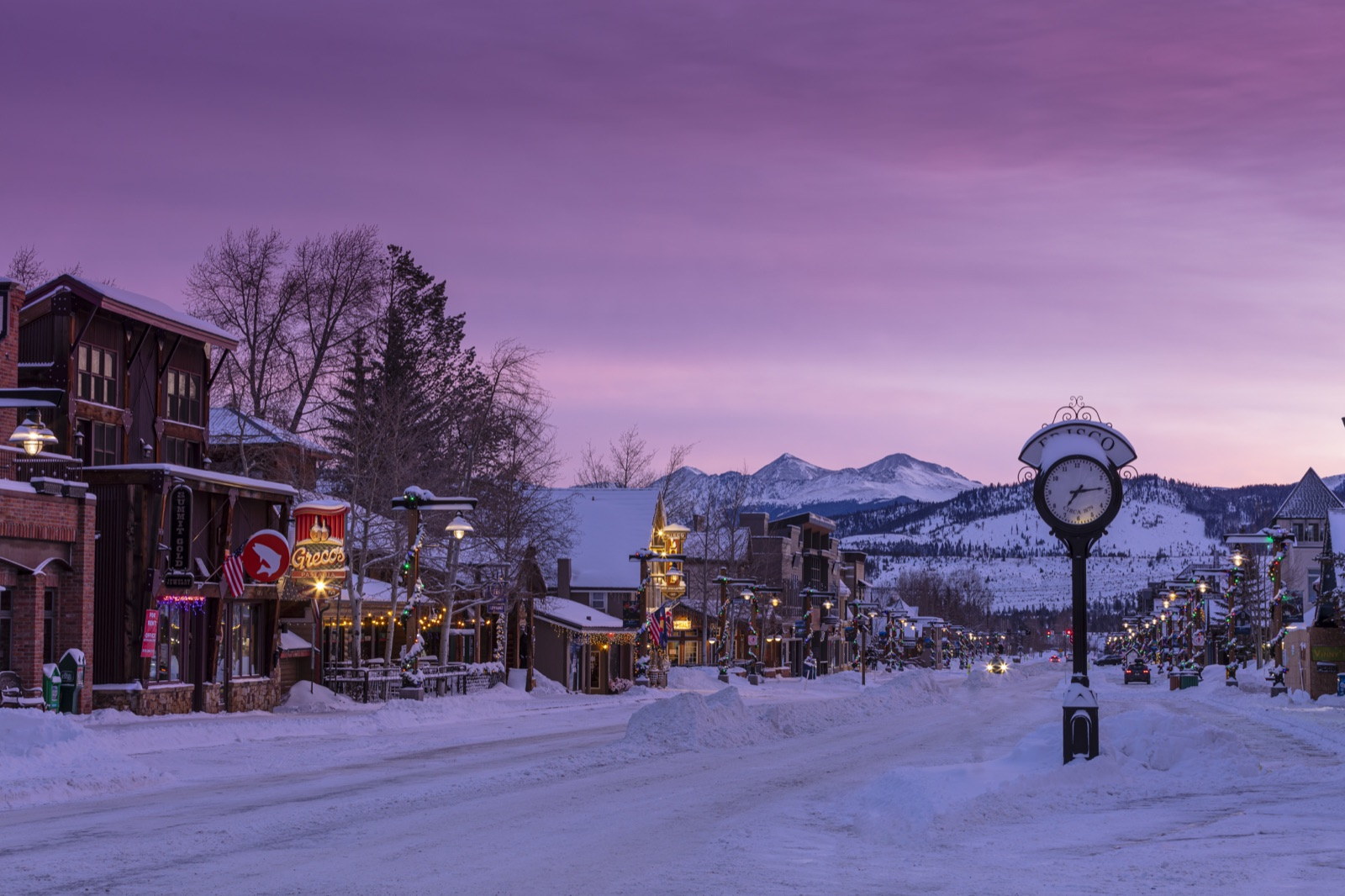
Snow-covered Main Street in Frisco, Colorado, at twilight with mountains in the background
Photo: Town of Frisco

These three towns sit close enough together that a lodging map can make the choice look trivial. It isn’t. Where you sleep changes which mountain feels easy at 7:30 a.m., whether dinner requires another drive, how useful the free bus actually is, and whether your “central” location is central to the ski week you are actually planning.

The better question is not which town sits in the middle of Summit County. It is which compromises you want to repeat every morning and every evening.

THE SHORT ANSWER

Choose the week you will actually ski.

01 / WALKABLE DEFAULT

Frisco

The best default for a multi-mountain trip.

Choose Frisco if you want the strongest combination of mountain access and an actual walkable town. Copper is exceptionally close, Breckenridge is easy, Main Street gives you restaurants and bars you can reach on foot, and the Summit Stage can make Copper particularly painless.

Frisco is the safest default when your week genuinely includes several mountains and you still want somewhere pleasant to come home to.

02 / EAST-SIDE ACCESS

Dillon

The Keystone and A-Basin choice.

Choose Dillon if Keystone and Arapahoe Basin are likely to dominate the trip. It puts you on the east side of the Summit County ski map, close to both, while keeping Copper, Loveland and Breckenridge within reasonable reach.

The trade is a smaller, quieter town with less of Frisco’s walk-out-the-door Main Street life.

03 / PRACTICAL BASECAMP

Silverthorne

The practical-basecamp choice.

Choose Silverthorne if space, errands, shopping, restaurants and broader lodging options matter more than being able to walk a traditional mountain-town Main Street. It is highly functional, with major retail, ski shops, groceries and services concentrated around the area, while several ski mountains remain within practical driving range.

It works particularly well for groups already planning to have a car.

PLANNING ORIENTATION

Your mornings run in different directions.

Frisco pulls the ski week west toward Copper. Dillon and Silverthorne pull it east toward Keystone, A-Basin and Loveland. Breckenridge branches south.

THE SKI-WEEK COMPARISON

Compare the ski week, not the pin on the map.

These are planning estimates, not promises. Snow, weekend traffic, exact lodging location and I-70 conditions can change them substantially.

Your decisionFriscoDillonSilverthorne
Best forMulti-mountain tripsKeystone + A-Basin-heavy tripsSpace, services and a car-based week
Copper~7 min~17 minRoughly within 30 min
Breckenridge~15 min~26 minRoughly within 30 min
Keystone~20 min~11 minRoughly within 30 min
A-Basin~25 min~16 minRoughly within 30 min
Loveland~20 min~18 minRoughly within 30 min
Walk-to-dinner factorStrongestModerate in the right locationLocation-dependent / more spread out
Car usefulnessOptional for some itinerariesMore usefulVery useful
Everyday errandsStrongGoodStrongest practical retail base
Families / groupsEasy evenings + good accessQuiet and well positionedOften strongest for space and household logistics

Do not overread the minute estimates. The useful distinction is which side of the county your ski plan repeatedly sends you toward. Frisco estimates · Dillon estimates · Silverthorne estimate

01 / FRISCO

Frisco: the neutral ground that actually feels like a town

Frisco has no ski mountain of its own, and that is part of why it works so well. You are not paying for ski-in/ski-out access to one resort while spending half the week driving away from it. Instead, you get a historic Main Street, a real restaurant and bar scene, and a location that makes several different ski days plausible.

The standout is Copper Mountain. Frisco puts Copper roughly seven minutes away in normal conditions, and the Town of Frisco specifically recommends the free Summit Stage connection as an easy alternative to driving and parking. Breckenridge is also roughly 15 minutes away, while Keystone and Loveland are around 20 and A-Basin around 25 in ordinary conditions.

That geography makes Frisco particularly useful for a trip built around several mountains rather than one resort.

Frisco’s other advantage shows up after skiing

Main Street matters more after three or four ski days than it does while you are comparing hotel listings. Frisco has a real concentration of restaurants, bars and shops along a walkable Main Street, while Summit Boulevard and the Basecamp area handle the practical side of the trip with groceries, coffee, ski shops and other errands.

That gives a group something valuable after 4 p.m.: independence. Not everyone has to get back into the same car because one person wants dinner and another wants a beer.

Frisco is the choice when you want the ski trip to remain a town trip after the lifts stop.

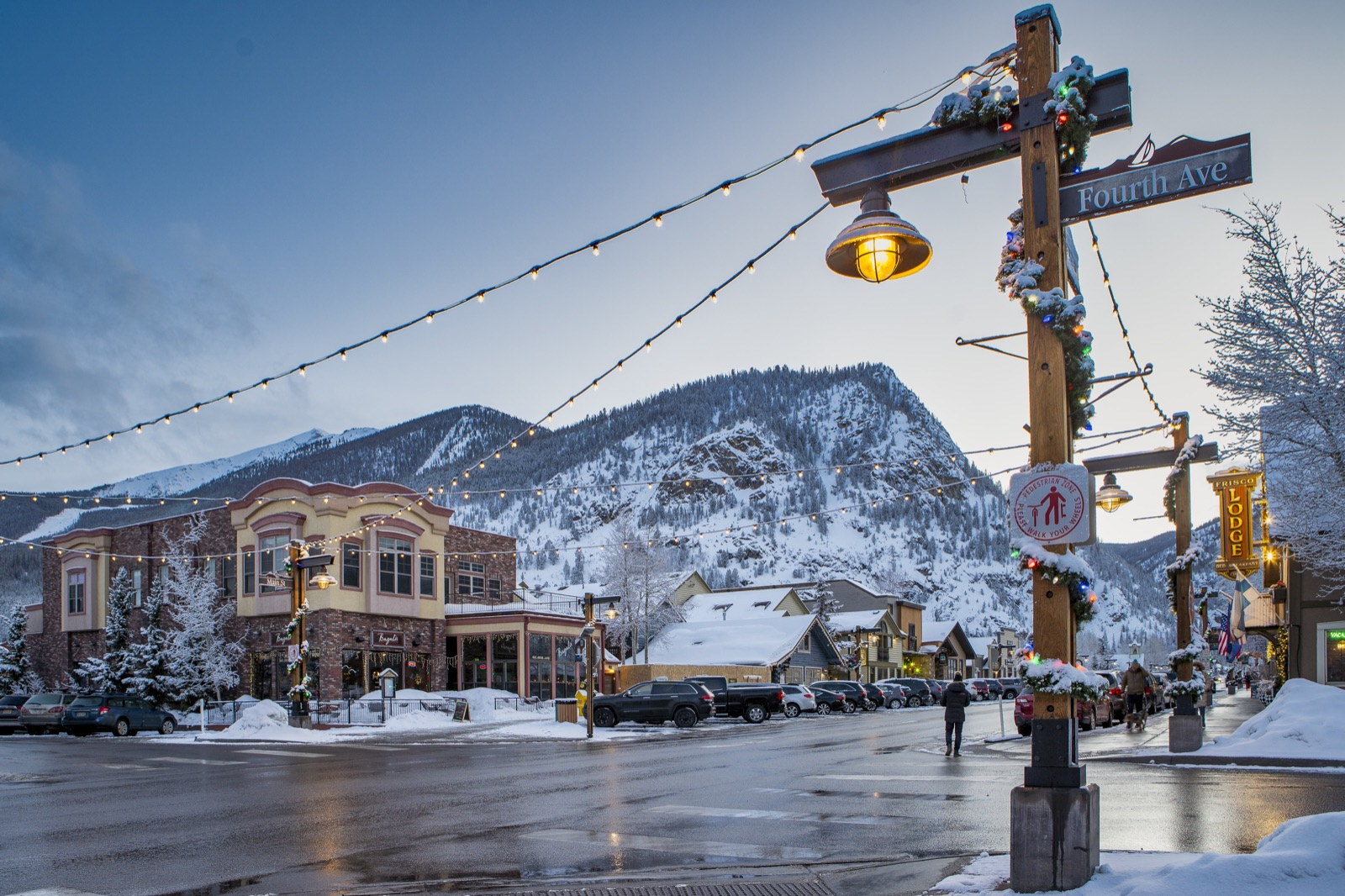
Fourth Avenue in Frisco, Colorado, with snow-covered mountains behind town
Photo: Joe Kusumoto, courtesy Town of Frisco

02 / DILLON

Dillon: choose it because your ski week points east

Dillon makes more sense once you stop thinking of these towns as interchangeable points around a reservoir. If Keystone and A-Basin are high on your list, Dillon has a real geographic advantage.

Current town planning estimates put Keystone about 11 minutes away and A-Basin around 16. Copper is roughly 17 minutes, Loveland 18 and Breckenridge about 26 under ordinary conditions. That creates a very different ski week from staying in Frisco and repeatedly driving east.

Dillon is quieter, but not dead

Dillon is a small lakeside town, not a resort village and not simply a collection of condos. Restaurants, breweries, cafés, shops and entertainment give it enough town life for a ski trip, but the evening advantage is not “more to do.” It is being well positioned for the mountains you care about, then coming back to a quieter base.

For a family skiing mostly Keystone with an A-Basin day or two, that can be exactly right.

Lake Dillon and the surrounding Summit County mountains beneath an expansive sky.
Photo: Kelsey Booth / Unsplash

03 / SILVERTHORNE

Silverthorne: less postcard, more useful

Silverthorne used to be easy to dismiss as the place with the outlets next to I-70. That undersells why it works for a ski trip. It is the most practical of the three bases. Silverthorne has major everyday retail, groceries, outdoor stores, ski shops, restaurants, breweries, a recreation center and a growing downtown/arts area.

If you are renting a larger condo or house for six people, cooking some meals, replacing forgotten gloves, entertaining kids on a non-ski afternoon and driving to different mountains, those things are not glamorous. They are extremely useful. Silverthorne also sits directly on I-70 at Exit 205, putting multiple Summit County ski areas and Loveland within practical driving range.

The catch is that Silverthorne is not one walkable experience

This is where the lodging pin matters. Some lodging sits near the developing downtown and Blue River area. Other vacation rentals climb into residential neighborhoods such as Wildernest, where views and square footage can be excellent but “let’s walk to dinner” stops being a realistic organizing principle.

So when a Silverthorne condo looks like the obvious value winner, check the actual address, not just the town name.

Silverthorne works best when you already expect the car to be part of the week.

GETTING TO THE LIFTS

The free bus is useful. It is not teleportation.

Summit Stage is Summit County’s free public bus system. It connects towns, transit centers, shopping areas and several ski-resort corridors, and it can meaningfully reduce how much driving you do.

Connected does not mean direct.

Frisco-to-Copper is the clean example. Frisco is a major Summit Stage hub, and the town specifically promotes the free bus as an easy way to reach Copper without dealing with the drive and parking. Dillon and Silverthorne also have useful connections toward Keystone. But once your ski plan crosses the county, transfers can turn a route that looks easy on a network map into a much longer morning with skis, boots and children.

Do not book a supposedly car-free condo because the listing says “Summit Stage nearby.” Check the actual route, stop and transfer pattern first.

If the bus is central to the trip, choose the bus stop before you choose the condo.

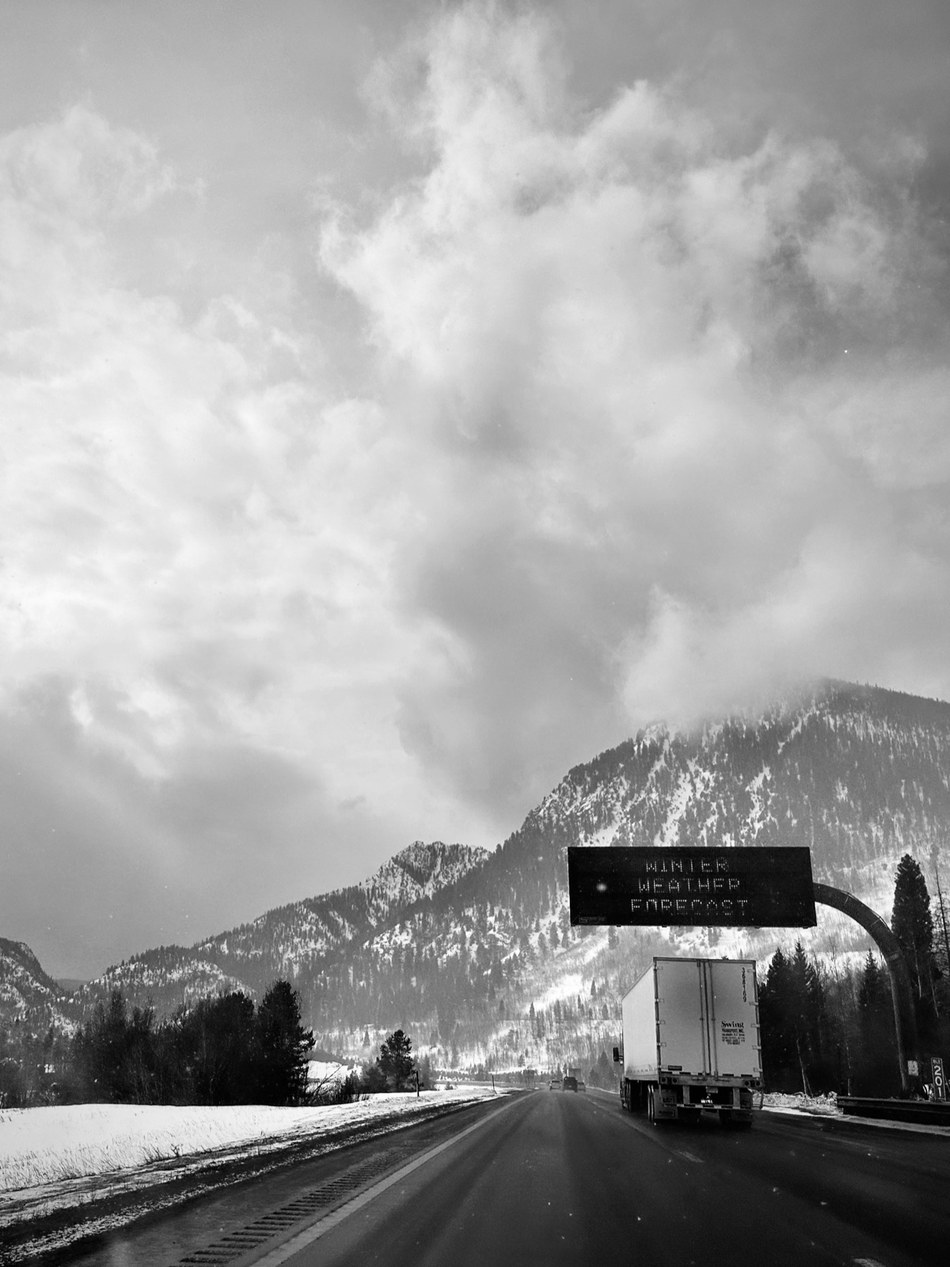
Truck and winter warning sign on a snowy Colorado mountain road.
Photo: Imitat / Unsplash

THE ROAD THAT CHANGES THE DECISION

I-70 is the fourth lodging choice

Frisco, Dillon and Silverthorne are only a few miles apart. On I-70, a few miles can be the difference between “right there” and “why haven’t we moved in 25 minutes?”

The I-70 Mountain Corridor is not ordinary suburban highway driving. Ski traffic concentrates hard on winter weekends: westbound traffic builds as people head for the mountains, while eastbound traffic stacks up when skiers head home. Snow, crashes, traction problems and heavy volume make the problem worse.

On bad ski weekends, I-70 can stop feeling like a highway and start feeling like a parking lot with mountain views. This matters to the lodging choice much more than the map suggests.

Copper-heavy trip: Frisco’s west-side position is a real advantage. You are already on the correct side of the county and do not need to cross as much of the I-70 corridor every morning.

Keystone/A-Basin-heavy trip: Dillon’s east-side position becomes more valuable. Choosing Frisco because it has the nicer Main Street and then repeatedly driving east gives some of that advantage back.

Silverthorne: excellent for I-70 access and practical errands, but you are still participating in the same corridor when traffic stacks up.

Vail day: Frisco is better positioned than Dillon or Silverthorne, but none of these towns makes Vail Pass or weekend I-70 traffic disappear.

The lesson is not to obsess over a five-minute Google Maps difference between towns. It is to ask which direction your ski week repeatedly sends you when the road is busiest.

Weekend timing matters

A quiet Tuesday drive estimate is not a ski-weekend promise. Friday afternoons, Saturday mornings and Sunday returns deserve particular respect, especially during peak winter weekends. Add snow at the same time and the equation gets worse. Road conditions deteriorate, incidents become more consequential, and traffic that is already heavy can grind down further.

Before moving the car, check COtrip for live conditions, cameras and incidents.

THE GROUP TEST

With kids or a group, count independence

The family question is not simply which town has the biggest condo. Think about what happens when the group stops moving as one unit.

Frisco is strongest when teenagers, grandparents or non-skiers might want to walk for food or coffee without coordinating a car. Main Street and the town’s compact scale create the most independence.

Dillon works particularly well for a family whose actual ski plan is Keystone first and A-Basin second. A quieter evening is not necessarily a drawback when the morning starts earlier and the kids are cooked by 7 p.m.

Silverthorne gets stronger when square footage and household logistics matter most: multiple bedrooms, a kitchen, groceries, shops, recreation options and a car already built into the trip.

A bigger condo ten minutes farther away can absolutely be the better family purchase. Just be honest about whether everyone is willing to get back into the car every time somebody wants dinner.

THE ONE-MOUNTAIN EXCEPTION

One question can make all three towns irrelevant

How many mountains are you actually going to ski? If the answer is Copper four days, maybe something else once, then stop congratulating yourself for choosing a perfectly central Summit County base. Stay at Copper if the lodging premium is reasonable.

The same logic applies to Keystone or Breckenridge. Slopeside or village lodging can eliminate morning parking, bus transfers and gear hauling. It lets one parent quit early with a child while somebody else keeps skiing, and it can make lunches or breaks dramatically easier.

Frisco, Dillon and Silverthorne earn their keep when multi-mountain flexibility is real, not theoretical. This is one of the easiest mistakes to make in ski-trip planning: paying for centrality and then skiing the same mountain five days in a row.

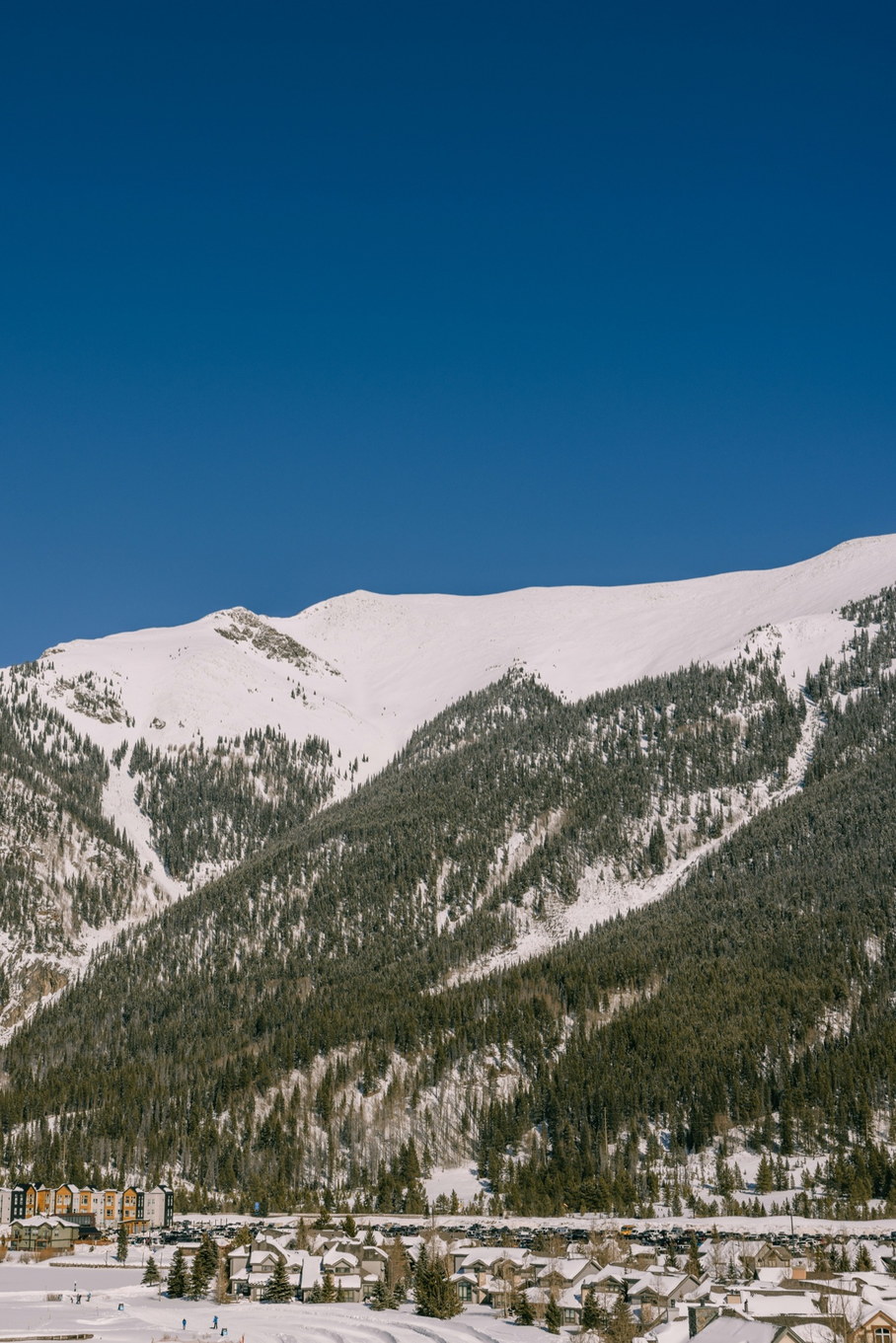
Copper Mountain ski terrain rising above base-area buildings and lodging.
Photo: Kelsey Booth / Unsplash

INSIDER POV

Don’t choose the middle. Choose your mornings.

All three towns look central when the map is zoomed out. I-70 is what makes that logic fall apart.

Write down the first three mountains you realistically expect to ski. If the list starts Copper, Copper, Breckenridge, Frisco should be difficult to beat. If it starts Keystone, A-Basin, Keystone, Dillon deserves much more attention. If the trip is six people, groceries, errands and a different mountain every morning, Silverthorne’s practicality starts looking better.

And if your plan repeatedly sends you across I-70 at peak ski-traffic times, that should count against the lodging choice just as much as the nightly rate. If the list is simply Copper, Copper, Copper, the best answer may be none of these towns.

Centrality only has value when your itinerary — and the road — let you use it.

BEFORE YOU BOOK

Check the details that can change the answer.

01

Check the actual address

“Silverthorne,” “Dillon” and even “Frisco” can describe lodging with very different walkability and transit access. Open the address, not just the town name.

THE BOTTOM LINE

Which town should you choose?

Choose Frisco if you want the strongest all-around multi-mountain base, the easiest Copper access and the best walk-to-dinner environment of the three.

Choose Dillon if Keystone and A-Basin are likely to dominate the ski week and a quieter lakeside town sounds better than paying for Frisco’s Main Street advantage.

Choose Silverthorne if space, groceries, shopping, services and practical group logistics matter more than classic mountain-town walkability, especially if you already expect to drive.

And if one mountain is going to dominate the trip, price lodging at that mountain before choosing any of them.

The best Summit County base isn’t the town in the middle. It’s the one that makes your actual ski week easier.