
2026/27 ski pass market report
2026/27 Ski Pass Market Report
What got more expensive, what got easier to use, and what the cheaper tiers actually give up.
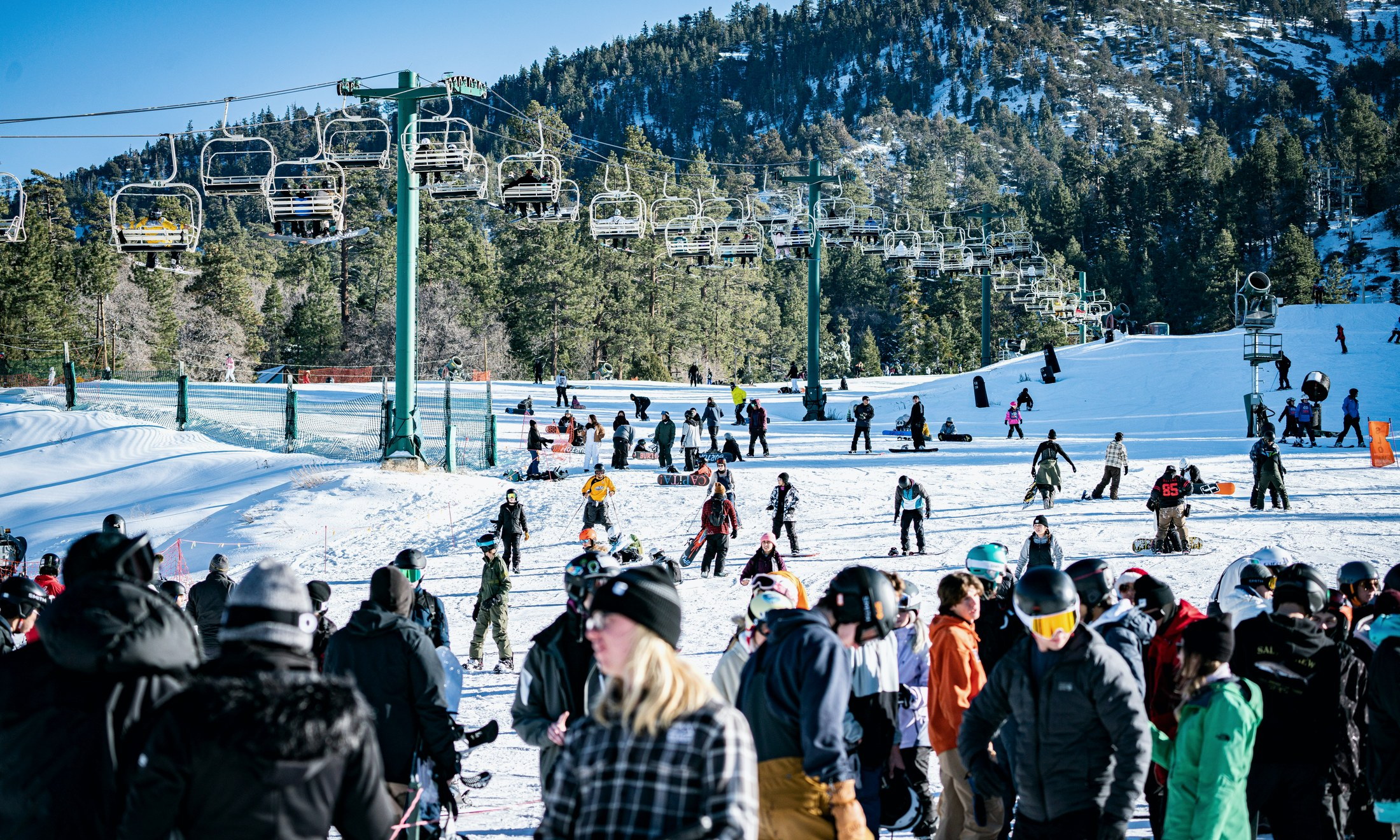
According to the National Ski Areas Association, season passes accounted for 49% of U.S. skier and snowboarder visits in 2025/26. That season finished at 53.1 million visits even though national average snowfall was 33% below the 10-year average.
That makes 2026/27 an interesting point in the pass wars. The story is no longer simply that networks keep getting bigger. Cheaper tiers are becoming more capable, blackout rules are more targeted, and selected products are using scarcity or automatic renewal to push skiers toward earlier commitments.
The useful question is no longer only what a pass costs. It is what that price buys this winter, and what you actually give up by spending less.
Tier strategy
The cheaper tiers got harder to dismiss.
Ikon Base is listed from US$1,099 for adults 23+, which is $430 below full Ikon. It includes 15 unlimited destinations, with unlimited Arapahoe Basin newly added for 2026/27, and five Snowmass-only days. Full Ikon still buys the mountains that disappear from Base, generally seven days instead of five at limited partners, access across all four Aspen Snowmass mountains, and freedom from Ikon blackout dates.
Epic Local costs $849, or $296 below full Epic. It still carries a network of more than 50 resorts, including unrestricted Breckenridge, Keystone and Crested Butte. Full Epic primarily removes the shared 10-day Vail, Beaver Creek and Whistler Blackcomb pool, selected peak restrictions, and omissions such as Telluride and Resorts of the Canadian Rockies. The lower tier is no longer a token discount. For the right geography, it is the pass.
Save $296 with Epic Local
Keep the useful center. Accept the edges.
Keep
- 50+ resort network
- Breckenridge
- Keystone
- Crested Butte
- Meaningful international access
Accept or give up
- Shared Vail, Beaver Creek and Whistler pool
- Selected peak restrictions
- Telluride and RCR
- Deeper Europe access
Save $430 with Ikon Base
Keep broad repeat access. Name the missing trip.
Keep
- 15 unlimited destinations
- Winter Park, Copper and A-Basin
- Sugarbush and Tremblant
- Broad five-day network
Accept or give up
- Alta, Deer Valley and Jackson Hole
- Sun Valley and Snowbasin
- Generally five instead of seven days
- Base blackout dates
Price timing
Prices rise twice: once between seasons, then again while you wait.
Launch price and current price answer different questions. Launch shows where the operator opened the market. Current price shows what a buyer actually faces today. Mixing them makes year-over-year comparisons look cleaner than they are, so PassTracks will preserve both. For longer-term adult full-pass launch prices and inflation context, see our Epic and Ikon price history.
Prices rise while the passes are still on sale.
Spring launch price versus current verified adult price · Verified Sept. 25, 2026
Holiday access
A blackout date is not a blackout network.
The important question is not whether a pass has blackouts. It is whether the mountain you need is restricted on a date you cannot move. Epic Local and Ikon Base both apply selected restrictions rather than shutting the entire network. Regional products can be even more destination-specific.
| Pass | Thanksgiving | Christmas / New Year | MLK | Presidents |
|---|---|---|---|---|
| Full Epic | Unrestricted | Unrestricted | Unrestricted | Unrestricted |
| Epic Local | Selected resorts | Selected resorts | Selected resorts | Selected resorts |
| Full Ikon | Unrestricted | Unrestricted | Unrestricted | Unrestricted |
| Ikon Base | Generally unrestricted | Selected destinations | Selected destinations | Selected destinations |
| Mountain Collective | Unrestricted | Unrestricted | Unrestricted | Unrestricted |
| Indy Base | Resort-specific; final 2026/27 matrix pending | |||
Product models
Not every multi-mountain pass is selling the same winter.
Mountain counts blur five different products into one category. Epic and Ikon can anchor a season. Their lower tiers retain much of those networks with selected limits. Mountain Collective is a travel sampler. Indy distributes small allocations across independent mountains. Snow Pass is a narrower regional road-trip product.
Geography
The pass market looks different depending on where you start.
Canada is several pass markets, not one.
In eastern Canada, Ikon combines unlimited Tremblant with limited access at Le Massif, while Mountain Collective includes Bromont and Le Massif. Full Epic reaches Mont-Sainte-Anne and Stoneham through its current RCR relationship. L’EST GO represents another model entirely: two to eight pooled visits across four Eastern Townships mountains.
Western Canada is more travel-intensive. Whistler Blackcomb, SkiBig3, Revelstoke, Panorama, Sun Peaks and RCR’s interior mountains can make a network look deep while remaining hundreds of kilometres apart. A Canadian destination count is not the same thing as a compact drive market. Home-mountain repetition and cross-border travel access need to be judged separately.
West Coast and Pacific Northwest markets contain competing pass philosophies.
A Seattle-area skier can compare Epic repetition at Stevens Pass, Ikon access built around Crystal and limited days at the Summit at Snoqualmie, and Indy’s independent-mountain roaming. Farther south, Ikon’s Mammoth and Palisades Tahoe access, plus Mt. Bachelor and other limited partners, changes the map again.
The useful question is whether the pass anchors ordinary weekends, supplies several short road trips or mainly supports destination travel. Those are different jobs even when the products overlap in the same drive region.
The Midwest makes small allocations unusually practical.
Manageable drives among regional hills can make a two-day roaming model work well. Indy’s Midwest network provides that variety, while Epic-owned hills including Afton Alps, Mt. Brighton and Wilmot offer a different proposition: unlimited repetition at a familiar local mountain.
For a home-mountain family, vertical size is not the only measure of value. Frequency, evening use and a short drive can outweigh a much longer national resort list.
The Northeast remains the densest competitive drive market.
Epic, Ikon, Indy and New England Pass products overlap with smaller regional offers across a compact, cross-border travel corridor. The density makes national and regional products easier to compare on real drives rather than theoretical destinations.
That is why Northeast examples are useful, but they should illustrate competition rather than stand in for the whole continent.
Availability
Scarcity is becoming part of the product.
Indy uses renewal priority, a waitlist and capped inventory. Its April public allocation sold out in 37 minutes, and the operator later reopened sales after adding capacity. Snow Pass is also sold in limited batches. The old prompt was to buy before the price rose. For selected newer products, the prompt is now to buy before access disappears.
This is not yet a market-wide rule. It is a distinct sales strategy used by products whose identity depends partly on controlling volume.
Counterfactual
Value needs a real alternative.
Generic break-even math assumes every included day replaces an expensive window ticket. Most people would actually mix local passes, advance tickets, ticket packs, flexible dates or fewer trips. A pass has not saved $1,000 merely because its retail day-ticket sum is $1,000 higher.
The honest comparison is what this skier would realistically buy instead.
Participation
Most skiers still ski surprisingly few days.
of U.S. skiers and snowboarders skied five days or fewer in 2024/25.
Kottke End of Season and Demographic Report, via SAM MagazineA season-pass market is selling to a population in which most people do not ski a season's worth of days. That does not make passes irrational. It does mean convenience, commitment, travel plans and renewal behavior may explain more than a tidy price-per-day equation.
Follow the money
A bad snow year showed why resorts like prepaid passes.
Vail Resorts finished fiscal 2026 with skier visits down 13.4%, while lift revenue fell just 3.5%. Annual-pass revenue increased 3.9%. Resort net revenue declined 4.5% and Resort Reported EBITDA fell 11.7%.
Prepaid access cushioned lift revenue when visitation weakened. It did not protect food, lessons, rentals, lodging and other spending that depends on people physically reaching the mountain.
Source: Vail Resorts fiscal 2026 results.
Beyond access
Vail is looking beyond pass growth.
Through Sept. 18, Vail's 2026/27 North American pass-product units were down about 12%, while sales dollars were down about 6%. Unlimited products were performing relatively better than lower-frequency destination products, reinforcing a shift toward pricing, segmentation and customer mix rather than pass growth alone.
Vail's Epic Experience strategy focuses on the rest of the visit: food, lessons, rentals, technology, personalization and the guest experience. The commercial logic is straightforward. Vail spent years getting skiers into the network. Now it has to make that network more valuable once they are inside.
Capital
Alterra has a different financial clock.
Alterra is privately held by interests associated with KSL Capital Partners and Henry Crown and Company. KSL closed a continuation vehicle with more than $3 billion in commitments in 2024, allowing existing investors to stay invested or exit, and Alterra has announced more than $350 million in capital investment for 2026/27.
Vail and Alterra compete for many of the same skiers while answering to different ownership structures and financial pressures.
Independent economics
Indy does not have to own a mountain to send it customers.
Entabeni Systems owns Indy Pass and aggregates prepaid demand across independent operators. Bloomberg Businessweek reported that Soldier Mountain attributed roughly $35,000 in advance ticket revenue to Indy in one season. That is one mountain's experience, not an industry-wide average, but it illustrates how a network can move money without acquiring the hill.
Outlook
The pass war is entering a different phase.
Network expansion still matters, but the most revealing 2026/27 changes are about segmentation: lower tiers that cover more regular skiing, age and group pricing, selected blackout removal, controlled inventory, automatic renewal, and more attention to spending after the lift gate.
The next competition is increasingly about matching each skier to the highest-value tier they will keep renewing. That is more subtle than adding another logo to a resort map, and more consequential to the skier choosing between $849 and full Ikon from US$1,529 (ages 23+).
Reference desk
The 2026/27 reference desk
Current adult prices and concise access notes for the products that best represent the market. Product names link to PassTracks reviews; operator terms remain the purchase authority.
| Product | Current adult | Launch | Model | Unlimited access | Limited access | Key restrictions | Reservations | Availability | Verified |
|---|---|---|---|---|---|---|---|---|---|
| Epic Pass | $1,145 | $1,089 | Season network | Vail-owned core | Partner allocations | No Epic blackout dates | Destination-specific | On sale | Sep. 25 |
| Epic Local | $849 | $809 | Discounted network | 50+ resorts | 10-day shared premium pool | Selected peak dates | Destination-specific | On sale | Sep. 25 |
| Ikon Pass | $1,449 | $1,349 | Season network | 18 destinations | Generally seven days | No Ikon blackout dates | Destination-specific | On sale | Sep. 25 |
| Ikon Base | $1,019 | $924 | Discounted network | 15 destinations | Generally five days | Selected peak dates | Destination-specific | On sale | Sep. 25 |
| Mountain Collective | $729 | $669 | Curated travel | None | Two days per destination | No blackouts | Some destinations | On sale | Sep. 25 |
| Indy Base | $419 | Not tracked | Independent roaming | None | Two days per partner | Resort-specific; final matrix pending | Some partners | Capacity controlled | Sep. 25 |
| Indy+ | $469 | Not tracked | Independent roaming | None | Two days per partner | No Indy blackout dates | Some partners | Capacity controlled | Sep. 25 |
| New England Gold | $1,569 | Not tracked | Regional season | Four Boyne mountains | Six Boyne destinations | Product terms apply | No general rule | On sale | Sep. 24 |
| L’EST GO Card | CA$176–648 | Presale | Regional day pool | None | 2–8 pooled visits | No current date restrictions; eight-hour visits | No general rule | Presale; storefront varies | Sep. 11 |
| RCR Rockies Season Pass | CA$2,249 | CA$2,249 fall sale | Regional season | Four western Canadian resorts | None | No pass-level blackouts | No advance ski-day reservation | Fall sale through Oct. 16 | Sep. 11 |
| Colorado Gold Pass | $4,700 | Not tracked | Transferable regional | 19 Colorado resorts | None | One person, one mountain, one day | Some ticket exchange | Limited membership; application | Sep. 10 |
| Snow Pass | $339.99 | Not tracked | Limited-day regional | None | Two visits at 14 areas | Partner-specific; 5% fee | Partner-specific | Limited quantity | Sep. 25 |
Headline prices remain in each operator’s published currency. Where an operator publishes Canadian pricing, PassTracks records it in Canadian dollars rather than converting it into the USD launch-price chart.
The pass itself imposes no day cap during the stated access period.
A defined allocation of included days.
The pass is not valid at the specified destination on the specified date.
A separate condition from blackout status. A valid day can still require advance action.
Why PassTracks publishes this
The goal is not to crown one pass the winner.
Pass companies make it easy to compare mountain counts. They make it much harder to compare what those mountains actually mean. PassTracks tracks current prices, launch prices, included days, blackout dates, reservations and meaningful access changes so a lower price can be judged against what the skier actually gives up. The goal is to make the market easier to see.
This 2026/27 report is the first edition of an annual series and will remain archived when the next season's report is published.